 +86-18968933800
 No.515, Lingxi Strait Avenue, Cangnan, Wenzhou, Zhejiang, China


 English
 Français
 Español
 Deutsch
Blog ·
Blog ·
Blog ·
Blog ·
Blog ·
Blog ·
Blog ·
Blog ·
Blog ·
Blog ·
Blog ·
Blog ·
Blog ·
Blog ·
Blog ·
Blog ·

Custom Acrylic Museum Display Case Artwork Protection Box: Precision Protection for Valuable Displays
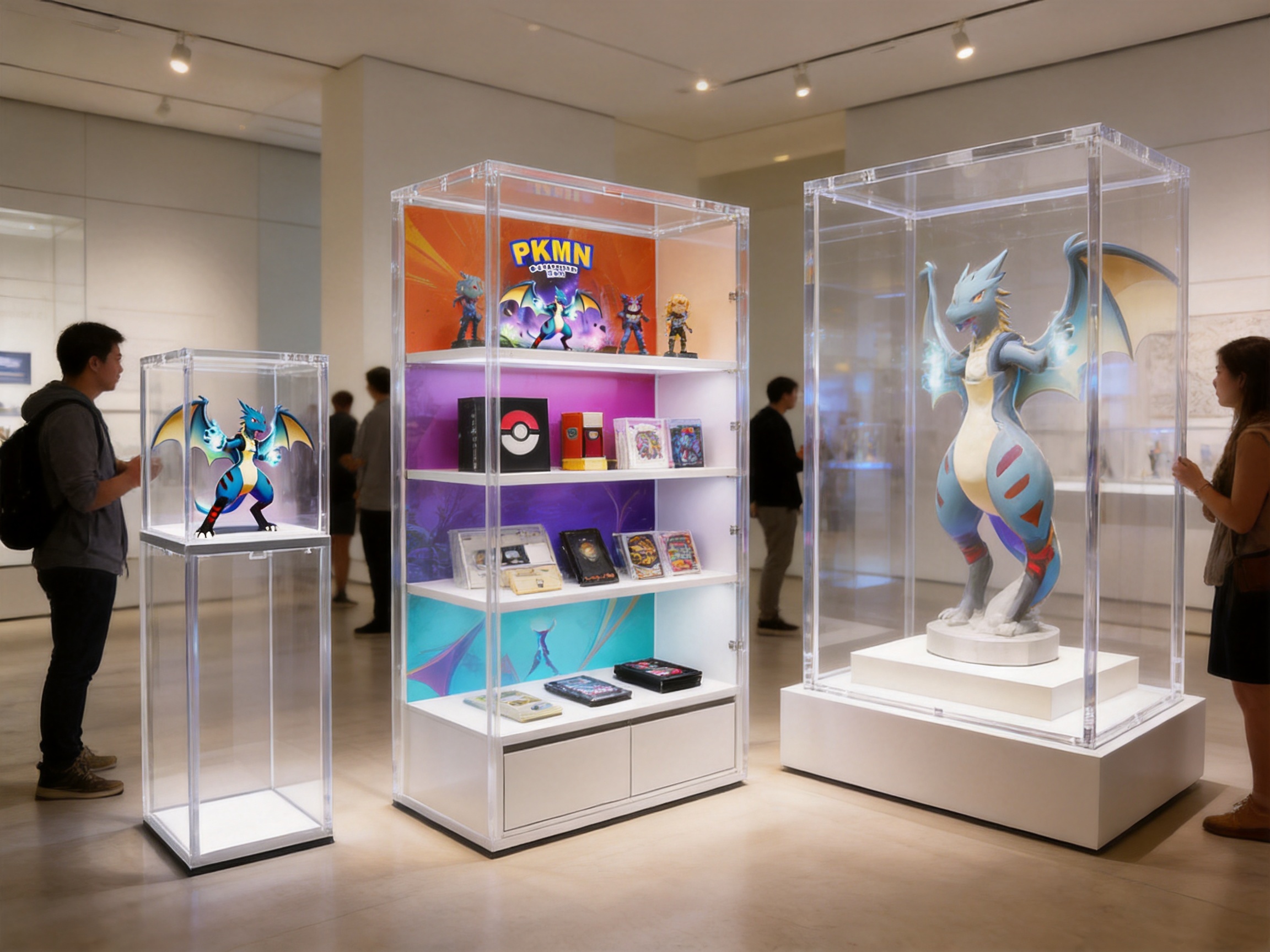
Protecting artwork, collectibles, character figures, licensed merchandise, and limited-edition products requires more than an attractive container. A professional display case must provide clarity, structural stability, reliable protection, adaptable internal space, and a presentation quality that supports the value of the item inside. The Custom Acrylic Museum Display Case Artwork Protection Box is designed to meet these requirements through transparent high-grade acrylic, precision fabrication, customizable dimensions, and flexible assembly options.
This product is suitable for museums, galleries, animation studios, game companies, licensed merchandise suppliers, retailers, collectors, event contractors, marketing agencies, and corporate exhibition teams. It combines the visual advantages of an open display with the protective benefits of an enclosed case. Visitors can view the displayed item from multiple angles while the artwork remains separated from dust, accidental contact, handling damage, and many common risks associated with open shelving.
Unlike standard stock display boxes, this acrylic protection box can be adapted to the specific size, shape, weight, and presentation requirements of the displayed object. The case may include multiple compartments, shelves, tiers, removable panels, snap-fit structures, or seamless glued construction. Its customized format allows businesses and institutions to create a display environment that is both practical and visually consistent with a brand, exhibition, retail setting, or interior decoration project.
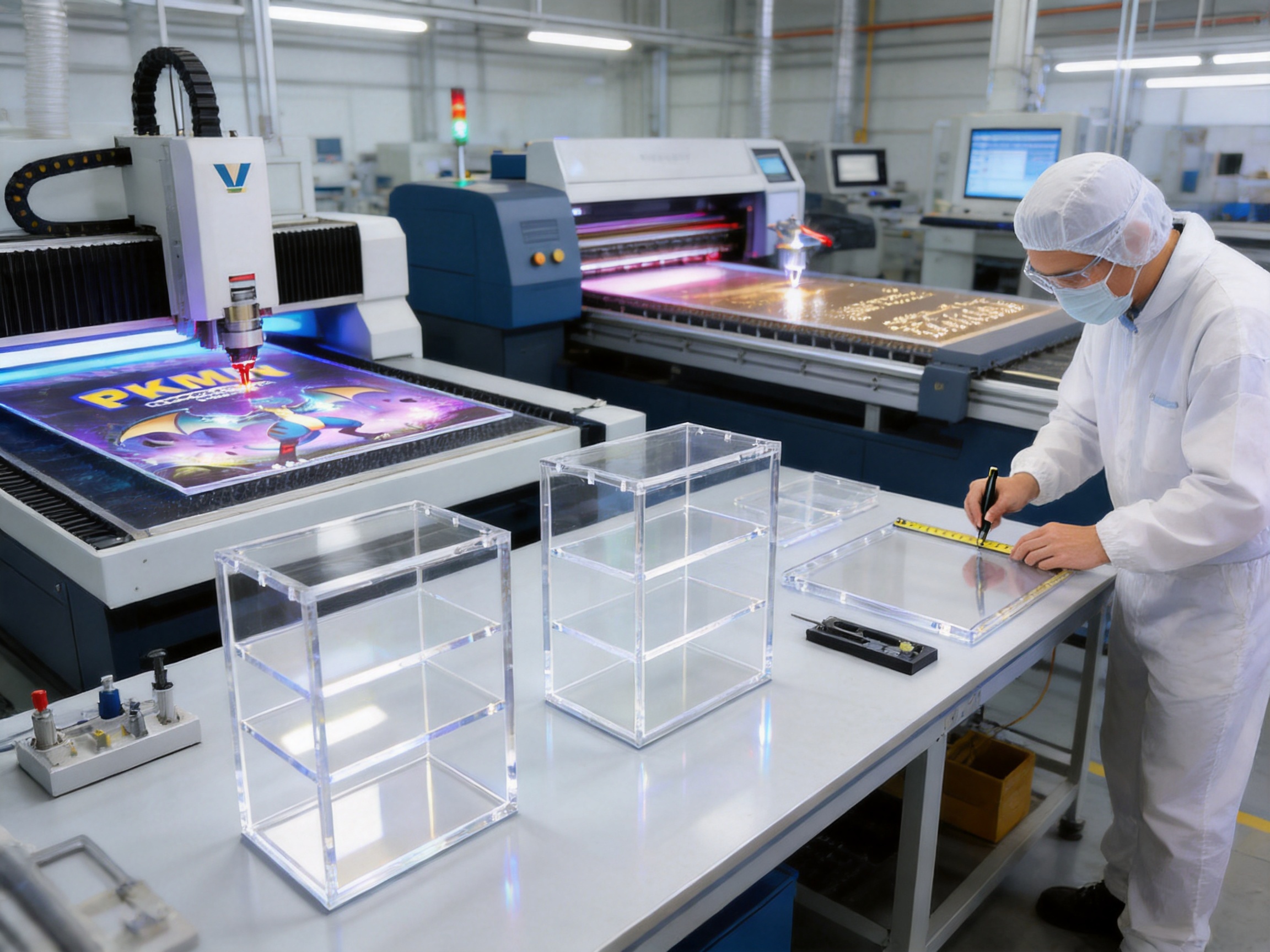
Manufactured by Wenzhou Chuangheng Packaging Co., Ltd., the product benefits from a complete customization workflow covering design adaptation, material cutting, printing, shaping, polishing, assembly, inspection, and packaging. The factory uses UV printing equipment, engraving machines, laser cutting machines, CNC processing technology, and other specialized machinery to achieve accurate dimensions, smooth edges, vivid graphics, and consistent production quality.
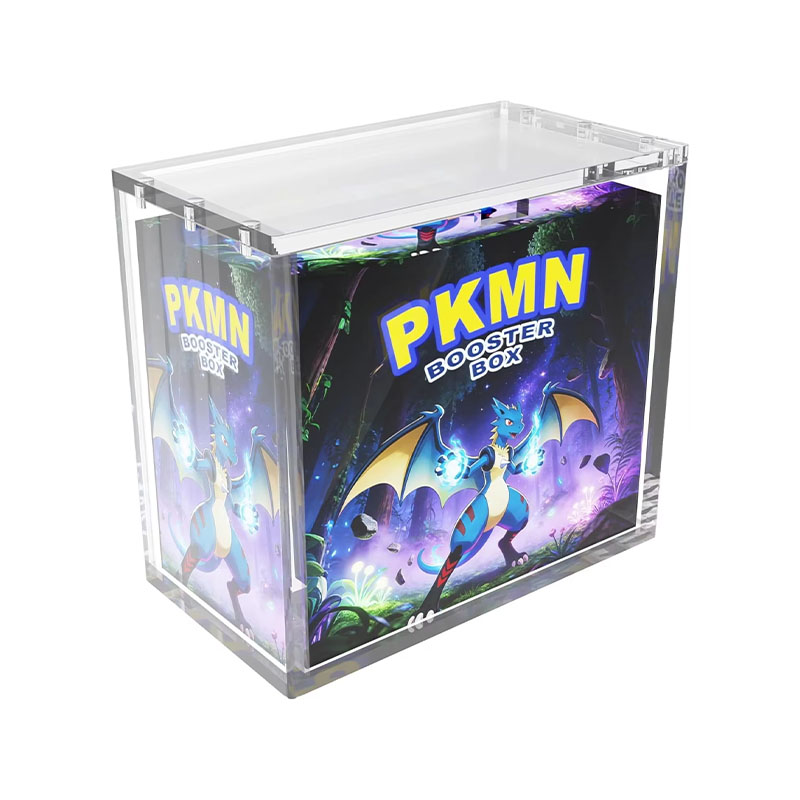
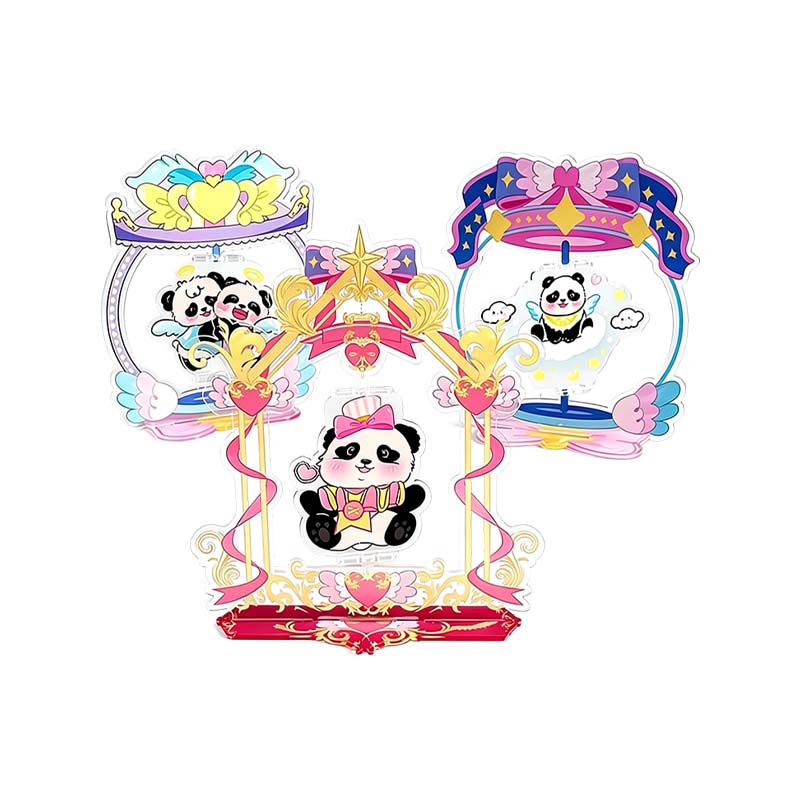
Custom Acrylic Museum Display Case Artwork Protection Box
Why Acrylic Is an Effective Material for Artwork Protection
Acrylic is widely used in museum-style cases, collectible showcases, retail displays, and promotional installations because it offers a practical balance between transparency, weight, durability, and production flexibility. High-grade transparent acrylic provides a clear viewing surface that allows the displayed item to remain the visual focus. When properly fabricated and polished, the panels create a clean, refined appearance suitable for both commercial and institutional environments.
Compared with ordinary glass, acrylic is generally lighter and easier to process into customized shapes. This makes it more convenient for shipping, installation, repositioning, and large-scale display projects. A lighter case can reduce handling difficulty during store installation, trade show preparation, and exhibition layout changes. It can also help reduce the structural demands placed on display counters, shelves, and temporary event fixtures.
Acrylic also provides useful impact resistance for everyday display applications. Although no transparent material should be considered indestructible, quality acrylic is less likely than conventional glass to shatter into sharp fragments when subjected to accidental impact. This characteristic is especially valuable in retail environments, public exhibitions, schools, event venues, and spaces where visitors may stand close to the case.
The material can be cut, drilled, engraved, bent, printed, and assembled according to the product concept. This versatility allows the case to be developed around irregular collectibles, large artwork, character figures, promotional packages, awards, prototypes, and other objects that may not fit a standard rectangular container. Acrylic can also be combined with printed panels, colored elements, logos, nameplates, and customized internal supports.
For long-term visual performance, proper material selection and processing are essential. The production team can select suitable sheet thicknesses and fabrication methods according to the dimensions and weight of the display. Edges may be polished for a smooth finish, while the panels can be aligned carefully to maintain a professional appearance. These details distinguish a purpose-built display case from a low-cost generic box.
Core Product Advantages
High Transparency and Clear Product Visibility
The primary advantage of the Custom Acrylic Museum Display Case Artwork Protection Box is its visual clarity. The transparent panels allow artwork and merchandise to be viewed without opening the case. This supports uninterrupted presentation in galleries, shops, exhibitions, corporate spaces, and private collections.
Clear visibility is particularly important for products with detailed surface artwork, small accessories, printed graphics, sculpted features, or branded packaging. A dark, cloudy, or poorly finished enclosure can reduce the perceived value of the item. By contrast, a clean acrylic structure helps light reach the displayed object and allows the colors, textures, and form of the product to remain visible.
The case can be designed with a fully transparent structure or combined with customized colored, printed, or opaque elements. This enables the display to maintain a balance between product visibility and brand identity. A logo panel, printed background, color-matched base, or themed internal insert can be introduced without compromising the main viewing area.
Customized Dimensions and Internal Layout
Standard display boxes often force users to adapt their products to an unsuitable interior. A case that is too large may make a small collectible appear lost, while a case that is too small may create pressure points or prevent the object from being positioned correctly. Custom sizing solves these problems by allowing the case to be developed around the displayed item.
The product can be produced in customized sizes with rectangular or specially adapted structures. Internal organization may include one open chamber, several compartments, multiple shelves, raised platforms, stepped tiers, or separated sections for product groups. The design can be adjusted for single artwork protection, a collection of related figures, product bundles, or a complete branded display scene.
Custom internal layouts also improve the visitor experience. Items can be arranged according to size, category, story sequence, color, or product hierarchy. In a retail environment, a tiered interior may allow customers to see several products simultaneously. In a museum or gallery, a raised platform can direct attention toward a central object while keeping supporting elements visually organized.
Stable Structure for Professional Display Environments
A display case must remain stable after installation. Unstable panels, uneven joints, and poorly aligned corners can undermine the appearance of valuable artwork and create unnecessary safety concerns. The product is manufactured with attention to panel accuracy, edge finishing, and assembly alignment to create a dependable structure for everyday use.
Depending on the intended application, customers may select adhesive-free snap assembly or glued seamless construction. Snap assembly can be useful when the case must be transported, disassembled, stored, or reconfigured. Glued construction is suitable when a permanent, streamlined appearance is preferred. The appropriate method can be discussed during the design and sampling stage.
The final structure can be adapted to the display environment. A compact tabletop box may be suitable for a collectible figure or premium product. A larger cabinet-style enclosure may be developed for a group of items, artwork, or an exhibition installation. The fabrication process allows the case to be scaled according to the intended use while maintaining a coordinated appearance.
Protection Against Dust and Accidental Contact
Open displays are vulnerable to dust accumulation, fingerprints, incidental contact, and handling damage. These problems can be particularly serious for delicate models, printed artwork, handmade pieces, and limited-edition products. Enclosing the item in an acrylic case creates a physical barrier that helps reduce routine exposure to these risks.
The protection box is not intended to replace specialized conservation systems for highly sensitive museum artifacts, but it provides effective everyday protection for many commercial, decorative, and exhibition applications. It can help maintain a clean presentation between scheduled maintenance sessions and reduce the frequency with which the displayed item must be handled.
For retail and promotional displays, the case can also discourage unauthorized touching or removal. This is useful for premium merchandise, prototypes, limited releases, awards, and branded objects that need to remain visible while being protected from unnecessary handling.
Modern Appearance for Branding and Interior Decoration
The modern rectangular form of the acrylic case works well with contemporary retail interiors, office environments, museum displays, exhibition booths, and home collections. Its transparent structure avoids visually overwhelming the object inside and can be integrated into different design styles.
The case may be used as a neutral protective enclosure or developed as part of a broader visual merchandising concept. Customized colors, printed backgrounds, engraved marks, internal platforms, and branded details can help create a more distinctive presentation. For animation and game-related merchandise, the case can support character themes, scene recreation, and franchise-specific color systems.
Because acrylic can be processed with high precision, it is possible to develop a consistent family of cases for an entire product range. Multiple sizes can share the same edge finish, assembly style, base design, and visual language. This consistency helps retailers and exhibition organizers create a professional environment across shelves, display tables, and promotional areas.
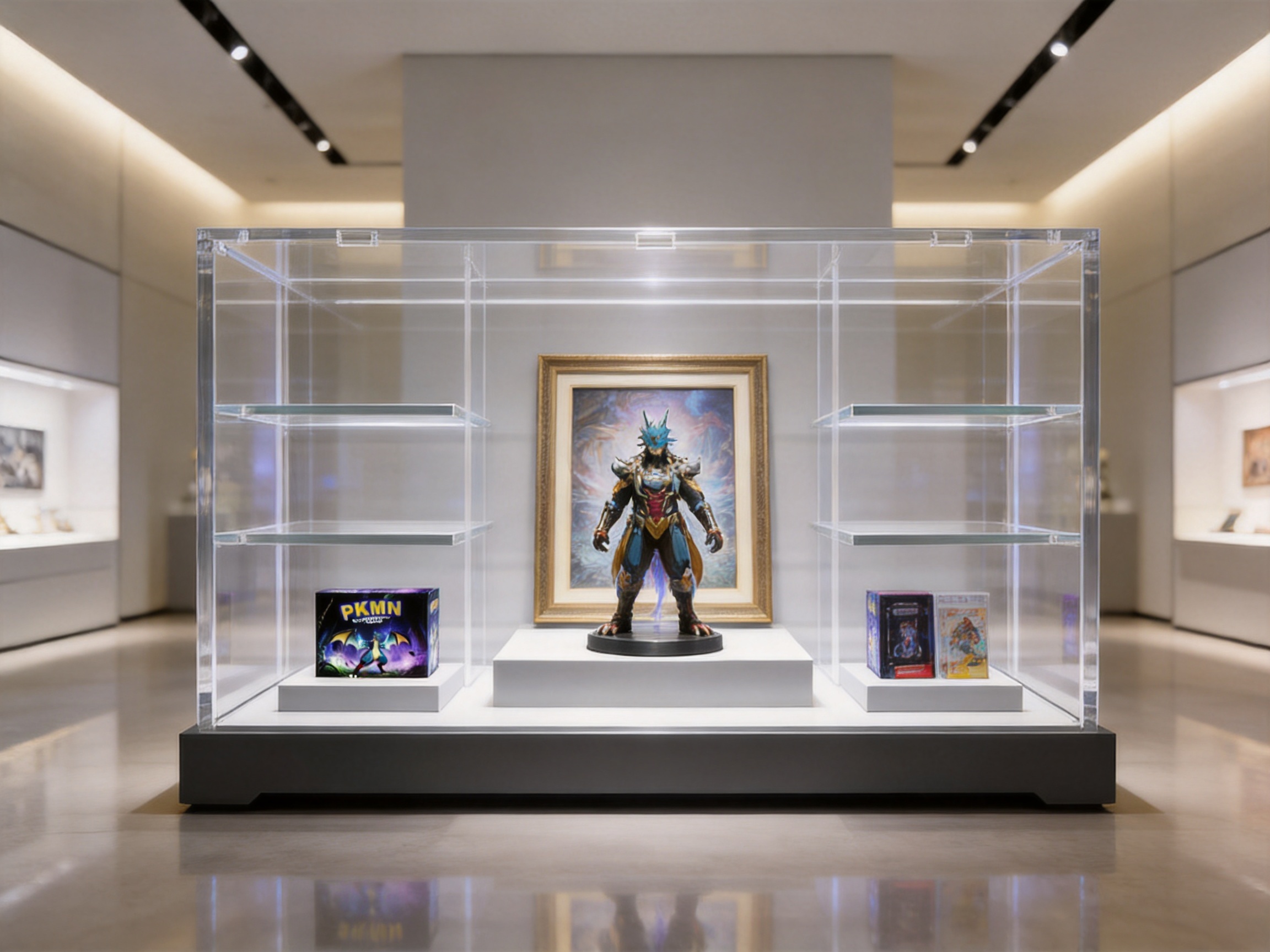
Applications Across Multiple Industries
Museum and Gallery Exhibitions
Museums, galleries, cultural institutions, and temporary exhibitions require display solutions that preserve visual access while creating separation between visitors and the displayed work. The acrylic case can be used for decorative objects, models, small sculptures, educational items, replicas, collectibles, and promotional exhibition materials.
Its transparent construction supports viewing from different directions, making it suitable for installations where visitors move around the display. Custom shelves and compartments can organize related objects while keeping the presentation neat. The enclosure can also help maintain a consistent appearance throughout an exhibition, especially when several cases are produced in coordinated sizes.
For temporary exhibitions, lightweight construction can simplify transport and installation. For permanent or semi-permanent settings, a more integrated glued structure may provide the streamlined appearance required by the venue. The final design should be selected according to the object, location, lighting, handling frequency, and conservation needs.
Animation and Game Merchandise
Animation studios, game companies, and licensed merchandise suppliers often need display cases that present character figures, special editions, prototypes, promotional products, and franchise-related objects. These items may have unusual dimensions or contain multiple parts, making a customized case more effective than a generic retail box.
The production team can adapt character artwork, logos, and themed design elements to suit the acrylic display format. A case can include a printed back panel, color-matched base, logo plate, tiered platform, or separated sections for figures and accessories. This creates a unified presentation that supports the visual identity of the intellectual property.
For launch events and trade shows, acrylic cases can be used to present new products before general release. For retail distribution, they can protect premium figures and promotional bundles while keeping them visible to customers. For internal corporate use, the same approach can support showroom displays, award presentations, and brand archives.
Retail Stores and Product Showcases
Retailers need displays that attract attention while keeping products clean, organized, and accessible to view. The acrylic protection box can showcase collectible items, promotional packages, jewelry-related accessories, limited products, small electronics, branded gifts, and seasonal merchandise.
A raised or tiered internal structure can make several products visible within a limited footprint. The transparent walls allow customers to see the complete display without requiring staff to repeatedly open the case. For high-value products, the enclosure adds a visible layer of protection while maintaining an inviting presentation.
Retail operators may also request repeated production in different sizes. Consistent fabrication allows stores to create coordinated countertop displays, wall displays, campaign installations, or product launch zones. Customized packaging can further protect the cases during shipment to multiple locations.
Brand Promotion and Corporate Events
Marketing agencies, event contractors, and corporate brand teams can use customized acrylic cases during product launches, roadshows, promotional campaigns, and corporate exhibitions. The transparent structure makes it possible to present a physical object while surrounding it with branded graphics or themed elements.
At an event, a well-designed case can draw attention to a prototype, award, limited-edition product, campaign symbol, or key visual object. The case can be integrated into a booth display, placed on a counter, or positioned within a larger branded installation. Because acrylic is relatively lightweight and customizable, it is practical for temporary event applications where displays must be installed and removed efficiently.
Custom printed components can reinforce brand recognition. Logos, slogans, event names, product information, and graphic patterns may be incorporated through suitable printing or engraving processes. This transforms a basic protective box into a useful communication tool.
Home Collections and Decorative Displays
Private collectors often need protection for figures, signed items, handmade crafts, souvenirs, models, and limited-edition products. The case can be designed for a single centerpiece or a group of related objects. Its modern appearance makes it suitable for living rooms, offices, bedrooms, hobby rooms, and personal libraries.
For home use, features such as easy cleaning, compact dimensions, removable panels, and flexible shelf layouts may be especially valuable. A customized case can fit an existing cabinet, tabletop, shelf, or wall-mounted display area. The transparent design allows the collection to remain visible while reducing exposure to dust and accidental contact.
Advanced Manufacturing Process
Design Consultation and Requirement Analysis
Production begins with a clear understanding of the display objective. The customer may provide product dimensions, reference images, drawings, artwork files, packaging details, or a basic concept. The manufacturing team reviews the requested size, material thickness, internal layout, assembly method, finish, graphics, packaging requirements, and expected order quantity.
This stage is important because a display case must be designed around both the object and its environment. The team considers how the case will be viewed, transported, opened, cleaned, installed, and maintained. If the case is intended for a trade show, the priorities may include low weight and rapid assembly. If it is intended for a permanent showroom, a seamless appearance and integrated structure may be more important.
The company has an experienced graphic design team capable of preparing design drafts for international clients. According to the provided production information, design drafts can be developed within approximately two hours for suitable projects, while urgent samples may be completed within approximately 24 hours after the required specifications and artwork are confirmed.
Artwork Adaptation and Structural Development
Artwork is reviewed for compatibility with acrylic printing, engraving, cutting, and assembly. Character graphics, logos, patterns, and promotional images may need to be resized, separated into layers, adjusted for color, or repositioned to fit the case. The design team can help optimize the artwork so that the final product maintains visual clarity and accurate proportions.
Structural development includes determining the number of panels, joining method, shelf positions, base arrangement, and access points. The design may use snap-fit components for removable assembly or bonded joints for a permanent construction. For multi-level displays, the team evaluates the spacing between tiers and the visual relationship between the products inside.
Special attention is given to corner alignment and the interaction between panels. Accurate design preparation reduces material waste, helps prevent assembly problems, and improves consistency between samples and mass-produced units.
Precision Cutting and CNC Processing
Professional CNC cutting technology is used to achieve accurate panel dimensions and consistent shapes. CNC processing supports repeatable production, which is essential when a customer requires hundreds or thousands of units with the same specifications. Accurate cutting also contributes to clean alignment during assembly.
Laser cutting and engraving equipment may be used for detailed components, decorative features, logos, labels, and smaller parts. These technologies allow the factory to process both straightforward rectangular panels and customized elements requiring fine detail. The selected machine depends on the material thickness, shape, edge requirements, graphic details, and production volume.
After cutting, the parts are checked for burrs, rough edges, dimensional deviations, and visible processing marks. Corrective finishing may include edge polishing, cleaning, or additional surface treatment. These steps help ensure that the finished case provides a refined appearance rather than an unfinished industrial look.
UV Printing and Color Reproduction
UV printing equipment is used to produce vivid graphics on suitable acrylic components. This is valuable when the display requires a printed background, logo, character illustration, decorative pattern, or promotional message. The printing process can help reproduce detailed artwork with strong visual impact.
Color reproduction is especially important for licensed merchandise and branded displays. Incorrect colors can weaken brand recognition or reduce the visual quality of a character design. The production team therefore reviews the artwork, printing requirements, and intended display conditions before manufacturing. Where necessary, sample approval allows customers to evaluate the result before bulk production begins.
Printed acrylic elements can be transparent, partially transparent, or visually solid depending on the required effect and production configuration. This enables designers to combine open visibility with selective graphic coverage. For example, a transparent case may include a printed rear panel that strengthens the theme without blocking the view of the main product.
Polishing, Forming, and Assembly
After cutting and printing, acrylic parts may undergo polishing, shaping, bending, or other finishing processes. Smooth edges are important for both appearance and handling. Proper polishing can make the case look clearer and more refined, especially when the edges are visible under exhibition lighting.
Assembly is completed according to the agreed structural design. Snap-fit systems support disassembly and convenient transportation, while glued construction can create a cleaner permanent enclosure. The production team checks the fit between panels, the stability of shelves, the position of printed components, and the overall squareness of the finished structure.
For customized displays with several compartments or tiers, assembly accuracy is essential. Small errors can cause shelves to sit unevenly or make the case appear misaligned. A controlled assembly process helps maintain consistency between units and reduces the likelihood of installation problems at the customer’s location.
Quality Control and Inspection
The factory operates under an ISO 9001 certified quality management system. This indicates that production is organized around documented quality procedures, process control, inspection, and continuous improvement. Certification alone does not replace product-specific inspection, but it provides a structured foundation for consistent manufacturing.
Quality checks may include verification of panel dimensions, surface clarity, edge smoothness, print appearance, color consistency, assembly alignment, structural stability, and packaging condition. For custom orders, inspection also confirms that the finished product matches the approved drawings and samples.
Reliable quality control is one of the key differences between a professional custom manufacturer and an informal supplier. When a customer is preparing a retail launch, exhibition, or licensed merchandise campaign, inconsistent cases can create additional labor, delay installation, and weaken the overall presentation. A controlled process helps reduce these risks.
Customization Options
Size and Shape
The case is available in customized sizes rather than being restricted to a fixed standard format. Customers can specify the dimensions required for a figure, artwork, product package, collection, or display installation. While the standard product information identifies a rectangular shape, the structure can be adapted within practical manufacturing limits to suit different presentation concepts.
Size selection should account for the dimensions of the displayed object, desired viewing distance, internal clearance, shelf thickness, access requirements, and shipping conditions. A small amount of clearance around the object can improve visual balance and simplify placement or removal. Excessive empty space, however, may reduce the visual impact of the display and increase packaging volume.
Internal Compartments and Shelves
Multiple compartments can separate products by category, color, size, or function. Shelves and tiers can create a stronger visual hierarchy and improve the visibility of items positioned behind or below others. Internal platforms may also be used to raise a centerpiece or create the appearance of a miniature scene.
For collections containing accessories, an internal layout can prevent smaller items from being hidden by larger ones. For retail presentations, it can organize products in a way that encourages comparison. For museum-style displays, compartments can support explanatory grouping and help maintain a clear visual narrative.
Assembly Methods
Adhesive-free snap assembly is appropriate for projects requiring flexible handling. It may simplify shipping, storage, and on-site setup. If a panel needs to be removed for cleaning or product replacement, a modular structure can be convenient.
Glued seamless construction is suited to permanent displays where a continuous, refined appearance is preferred. Bonded joints can reduce the visual interruption caused by connectors and create a more integrated enclosure. The correct solution depends on the customer’s handling expectations, installation environment, and maintenance plan.
Graphics, Logos, and Special Finishes
Customized graphics may include full-color illustrations, logos, product names, event messages, decorative patterns, and themed backgrounds. Engraving can be used for understated marks, labels, or decorative details. Different combinations of transparent, printed, polished, and colored acrylic can produce distinct visual effects.
Special finishing requirements should be specified before sampling. The design team can advise on how to balance the printed area with the transparent viewing area, how to position a logo for maximum visibility, and how to adapt artwork to the available production methods.
Packaging and Shipping Preparation
Customized acrylic cases require suitable packaging because polished surfaces and corners must be protected during transportation. The provided product information identifies a single-item selling unit with an approximate package size of 21.0 × 11.0 × 19.0 centimeters and a gross weight of approximately 2.0 kilograms. Actual packaging dimensions and weight may change according to the final case size, structure, accessories, and order quantity.
Packaging solutions can be discussed as part of the OEM and ODM service. Protective materials, internal separation, labeling, and outer-carton arrangements may be selected according to the shipping method and destination. Proper packaging is particularly important for international orders involving sea freight, air freight, or express delivery.
Advantages Over Generic Display Boxes
Generic display boxes can be useful for simple, low-risk applications, but they often have limitations. Their fixed dimensions may not fit the item correctly, and their internal space may not support the desired presentation. Customers may also have limited choices for graphics, assembly, material thickness, and packaging.
The customized acrylic protection box offers a more complete solution. It is developed around the actual product, display location, and brand objective. This reduces the need for improvised supports or modifications after delivery. A properly designed case can improve stability, visual balance, protection, and installation efficiency at the same time.
Another advantage is production consistency. When a business needs a series of coordinated cases, a professional factory can preserve the same dimensions, edge treatment, print position, and assembly standards across the order. This is more difficult when buying unrelated stock boxes from different suppliers.
The ability to combine design and manufacturing under one service also streamlines communication. Instead of transferring artwork between separate design, printing, cutting, and assembly vendors, customers can work through a single production workflow. This may reduce misunderstandings, shorten development time, and make it easier to manage revisions.
Flexible MOQ support is also beneficial. The stated standard MOQ for custom acrylic standees is 100 pieces, while flexible quantities may be considered for small-batch trial orders and larger-scale production. Customers should confirm the applicable MOQ for a specific display case design because material usage, tooling, printing, and assembly complexity can affect the final requirement.
OEM and ODM Support
The company provides OEM and ODM services for customized acrylic products. For display cases, this may include design adaptation, logo printing, dimension adjustment, shape development, internal layout planning, packaging solutions, sampling, and bulk production.
OEM support is useful when the customer already has a defined design or brand specification. The factory follows the supplied drawings, artwork, dimensions, and finish requirements while managing the manufacturing process. ODM support is useful when the customer has a product concept but needs assistance developing the structure, appearance, and production details.
The one-stop workflow covers design, material cutting, printing, shaping, polishing, assembly, inspection, and packaging. This integrated approach is particularly useful for international clients who need clear communication, coordinated scheduling, and dependable production support.
Customers may request prototypes before mass production. Sampling allows the final size, transparency, graphics, assembly method, and internal layout to be reviewed. Any necessary adjustments can be made before the full order is released. This is a valuable step for licensed products, premium merchandise, large retail campaigns, and projects with strict visual requirements.
Production Capacity and International Service
Wenzhou Chuangheng Packaging Co., Ltd. serves customers in South Korea, Japan, the United States, and other international markets. Its foreign trade experience supports communication related to product specifications, artwork, sampling, packaging, shipping, and order coordination.
The company’s equipment includes UV printers, engraving machines, laser cutting machines, and other specialized production tools. This equipment supports a broad range of acrylic cultural and creative products, including standees, keychains, clips, fridge magnets, figure display cases, badges, hooks, and acrylic gifts.
A broad product range can be useful for customers seeking a coordinated merchandise program. A brand may require acrylic keychains for customer sales, standees for retail displays, badges for events, and display cases for premium products. Working with one experienced source manufacturer can help maintain material quality, artwork consistency, and packaging coordination across the product line.
Production lead time for the display case is approximately 30 days after order confirmation according to the supplied product information. The detailed FAQ also states that custom acrylic standees may require approximately 15 to 20 days after design and sample confirmation. Because the display case and standee may involve different structures and production schedules, customers should confirm the final lead time for each project before placing an order.
Shipping can be arranged by sea freight, air freight, or express delivery. Sea freight is generally suitable for larger bulk orders when transit cost efficiency is important. Air freight may provide a balance between speed and shipment volume. Express delivery is convenient for samples, urgent small orders, and time-sensitive approvals. The best method depends on order size, destination, deadline, and budget.
Recommended Ordering Process
Step One: Provide Product and Display Information
Customers should provide the dimensions and weight of the item to be displayed, reference photos, preferred case size, intended use, quantity, artwork files, and shipping destination. If the product includes detachable accessories or fragile parts, this information should also be shared at the beginning.
Step Two: Confirm the Concept and Quotation
The factory reviews the requirements and recommends a suitable structure, material configuration, assembly method, and packaging approach. A quotation can then be prepared based on the design, quantity, printing, finishing, and shipping requirements.
Step Three: Review Artwork and Drawings
Artwork and technical drawings are checked for production compatibility. The customer reviews the proposed layout, dimensions, graphics, shelves, compartments, and visual details. This stage should be completed carefully because later changes may affect cost and lead time.
Step Four: Approve the Sample
A sample may be produced for projects requiring detailed evaluation. The sample allows the customer to inspect transparency, dimensions, edge finishing, print quality, stability, and overall appearance. Approval should be documented before mass production begins.
Step Five: Begin Bulk Production
After design confirmation, payment arrangement, and sample approval where applicable, production proceeds through cutting, printing, shaping, polishing, assembly, inspection, and packaging. The factory provides production coordination according to the agreed schedule.
Step Six: Arrange Delivery and After-Sales Support
Finished goods are packed according to the selected shipping method and prepared for dispatch. Customers should inspect the cartons promptly after receipt and report any concerns with photographs and order details. Clear communication supports efficient resolution of production or transportation issues.
Care and Maintenance Recommendations
Acrylic cases should be cleaned with a soft, lint-free cloth and a cleaner suitable for acrylic surfaces. Abrasive materials can create scratches, while harsh solvents may damage the surface or affect printed areas. Dust should be removed gently rather than rubbed aggressively across the panel.
The case should be placed on a stable, level surface away from locations where it may be struck or pushed. If the display contains several shelves or heavy items, the load should be distributed carefully. Objects should not be forced into the case if the internal clearance is insufficient.
When moving the case, support the base and avoid lifting it by a single panel or shelf. For larger units, two or more people may be needed. If the structure uses snap-fit components, the assembly should be handled according to the supplied instructions to prevent stress on connectors and edges.
Although acrylic is durable for many display applications, it should not be exposed unnecessarily to excessive heat, sharp impacts, or incompatible chemicals. If the displayed object has strict conservation requirements, the case design should be reviewed with an appropriate preservation professional before use.
Frequently Asked Questions
What is the Custom Acrylic Museum Display Case Artwork Protection Box used for?
It is used to protect and present artwork, collectibles, character figures, licensed merchandise, promotional products, prototypes, decorative objects, and other display items. It is suitable for museums, galleries, retail stores, exhibitions, brand events, corporate spaces, and home collections.
Can the acrylic case be made to a customized size?
Yes. The case is available in customized dimensions. Customers can provide the size of the displayed object and the required clearance, shelf layout, compartment arrangement, and installation conditions. The final dimensions should be confirmed through drawings or a sample before bulk production.
What assembly methods are available?
The product supports adhesive-free snap assembly and glued seamless construction. Snap assembly is convenient for removable, transportable, or reconfigurable displays. Glued construction is appropriate for a permanent structure with a smooth integrated appearance.
Can the case include shelves or multiple compartments?
Yes. The internal design can include multiple compartments, shelves, tiers, raised platforms, and other arrangements for different products and collectibles. The layout can be developed according to product size, viewing angle, display sequence, and brand presentation requirements.
Can logos and character artwork be printed on the display case?
Yes. OEM and ODM services include logo printing and design adaptation for licensed IP characters. UV printing, engraving, and other suitable methods may be used depending on the artwork, surface, color requirements, and desired visual effect.
What is the minimum order quantity?
The stated MOQ for custom acrylic standees is 100 pieces, with flexible quantities available for trial orders and bulk production. The MOQ for a particular acrylic display case should be confirmed separately because the final requirement may depend on size, material usage, printing, assembly complexity, and packaging.
How long is the production lead time?
The supplied product information states an approximate lead time of 30 days after order confirmation for the display case. Custom acrylic standees may require approximately 15 to 20 days after design and sample confirmation. The actual schedule should be confirmed for the specific case design and order quantity.
Can samples be produced before mass production?
Yes. Sampling is recommended for customized projects involving special sizes, complex internal structures, printed artwork, or licensed designs. A sample allows the customer to approve the appearance and functionality before the bulk order is manufactured.
Which shipping methods are available?
Sea freight, air freight, and express delivery are available. The preferred method depends on order quantity, destination, delivery deadline, and transportation budget.
Is the factory certified?
The factory operates under an ISO 9001 certified quality management system. Production also includes dimensional checks, surface inspection, graphic review, assembly verification, and packaging inspection as appropriate for the project.
Can the company handle related acrylic merchandise?
Yes. The company specializes in customized acrylic cultural and creative products, including acrylic standees, keychains, clips, fridge magnets, figure display cases, metal badges, wall hooks, and acrylic gifts. This makes it possible to coordinate display cases with broader promotional or merchandise programs.
Conclusion
The Custom Acrylic Museum Display Case Artwork Protection Box provides a practical and visually refined solution for protecting and presenting valuable displays. Its high-grade transparent acrylic offers clear visibility, impact resistance, durability, and design flexibility. Customized dimensions, compartments, shelves, tiers, assembly methods, graphics, and packaging allow the product to serve a wide range of museum, retail, exhibition, corporate, entertainment, and residential applications.
Its main advantage over generic display boxes is the ability to develop the entire structure around the object, brand, and environment. Instead of compromising with fixed dimensions or limited finishes, customers can request a purpose-built case that improves protection, presentation, organization, and installation efficiency.
The manufacturer’s advanced equipment, including CNC processing, UV printing, laser cutting, engraving, polishing, and professional assembly capabilities, supports consistent production from prototype to bulk order. An ISO 9001 certified quality management system, experienced design team, international trade experience, flexible order support, and multiple shipping options further strengthen the service.
For organizations seeking a dependable custom display solution, this acrylic protection box offers an effective combination of product visibility, structural stability, modern appearance, and manufacturing adaptability. With accurate design confirmation, appropriate material selection, careful sample approval, and suitable packaging, it can become a reliable part of a professional display, merchandising, or artwork protection program.
References
1. Product specification and technical information supplied for the Custom Acrylic Museum Display Case Artwork Protection Box.
2. Company manufacturing information supplied by Wenzhou Chuangheng Packaging Co., Ltd.
3. ISO 9001 quality management system principles for controlled manufacturing processes.
4. General acrylic material handling, cleaning, fabrication, and display maintenance practices.
5. General museum, retail merchandising, exhibition, and collectible display planning principles.
Product: Custom Acrylic Museum Display Case Artwork Protection Box

Ready to Begin?
Product Categories
Contact Information
 Email:
kaelissia.shop@gmail.com
 Phone:
+86-18968933800
 Address:
No.515, Lingxi Strait Avenue, Cangnan, Wenzhou, Zhejiang, China
QR Code
Copyright © Wenzhou Chuangheng Packaging Co., Ltd. All rights reserved.
