 +86-18968933800
 No.515, Lingxi Strait Avenue, Cangnan, Wenzhou, Zhejiang, China


 English
 Français
 Español
 Deutsch
Blog ·
Blog ·
Blog ·
Blog ·
Blog ·
Blog ·
Blog ·
Blog ·
Blog ·
Blog ·
Blog ·
Blog ·
Blog ·
Blog ·
Blog ·
Blog ·
Custom Double-Sided Epoxy Acrylic Keychains for Promotional Merchandise and Retail Supply
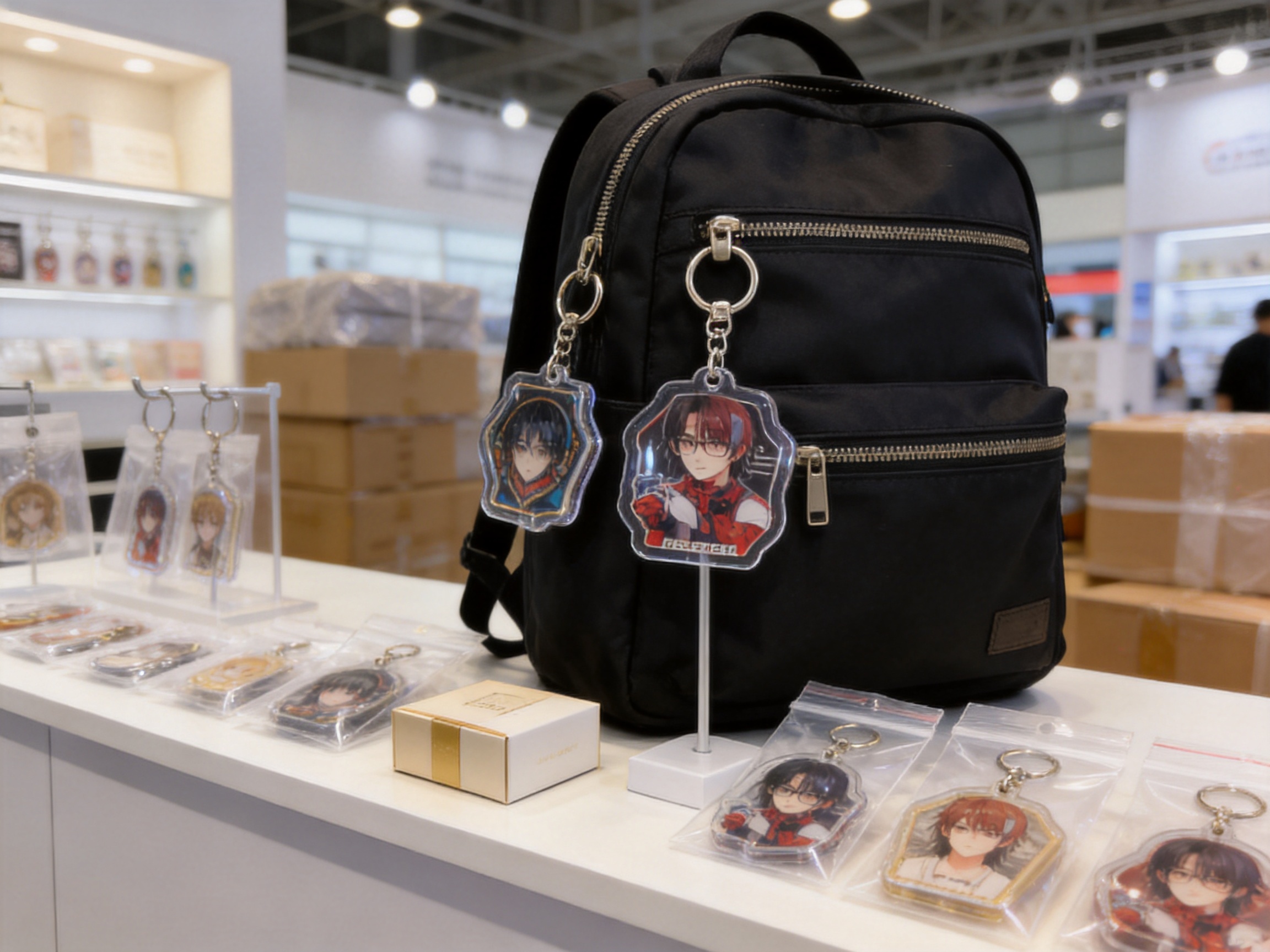
Custom acrylic keychains have become an effective way for brands, retailers, event organizers, and marketing agencies to turn artwork into practical, portable merchandise. Unlike disposable promotional items, a well-designed keychain can remain in daily use for months or years, keeping a logo, character, campaign message, or product identity visible wherever the user goes. The OEM Custom Logo Acrylic Keychain Epoxy Double Sided Holder is developed specifically for buyers who need customized accessories in commercial quantities, combining clear acrylic, full-color printing, precision cutting, optional epoxy coating, and flexible hardware configurations in one product.
This product is more than a standard decorative charm. It is a customizable branding tool that can be produced in irregular silhouettes, cartoon shapes, character profiles, logos, mascots, symbols, and other artwork-led formats. The front and back can carry the same artwork or different designs, giving buyers greater creative freedom than a single-sided printed keychain. An epoxy finish can also be added to create a glossy, raised surface that improves visual depth while helping protect the printed design from routine handling, moisture, and surface wear.
For importers, distributors, souvenir shops, gift stores, promotional agencies, and corporate procurement teams, the key advantage is the combination of customization and scalable production. Buyers can order according to a specific campaign, retail concept, or customer segment rather than being limited to standard factory shapes. The product can also be supplied with different attachment systems, packaging formats, colors, and dimensions, making it suitable for both short-term promotional use and long-term retail resale.
Why Acrylic Keychains Remain Effective Commercial Merchandise
Acrylic is an especially suitable material for compact promotional accessories because it offers a balance of clarity, light weight, durability, and visual adaptability. Compared with glass, acrylic is significantly lighter and less likely to shatter during transportation or everyday use. Compared with many soft plastic alternatives, clear acrylic provides a more polished appearance and better supports sharp, colorful printed artwork. Its smooth surface also works well with UV printing, epoxy finishing, and precision laser cutting.
The transparent structure of acrylic creates a visual effect that can make printed graphics appear brighter and more dimensional. This is particularly valuable for character merchandise, illustrated logos, food and beverage branding, travel souvenirs, gaming accessories, and event items. A buyer can select a clear base, a translucent color, an opaque color, or a combination of printed areas and exposed acrylic. Such options help a single basic product serve different brand identities and market positions.
Keychains also benefit from strong practical value. They can be attached to keys, backpacks, handbags, luggage, pencil cases, ID holders, and zipper pulls. Because the product is easy to carry, it can generate repeated exposure beyond the original point of sale or promotional event. A customer may receive the item at a conference, then continue displaying it on a bag long after the event has ended. For retailers, the compact size makes the product easy to stock, package, display, and ship.
In comparison with larger promotional products, acrylic keychains usually require less storage space and create fewer logistical challenges. Their low unit weight can be useful when buyers are planning international shipments, mixed-product orders, or subscription merchandise boxes. The supplied packaging dimensions are approximately 10 × 10 × 0.5 centimeters per unit, with an indicated gross weight of approximately 0.02 kilograms, although final measurements and weights may vary according to the selected shape, thickness, hardware, and packaging method.
Product Design and Customization Capabilities
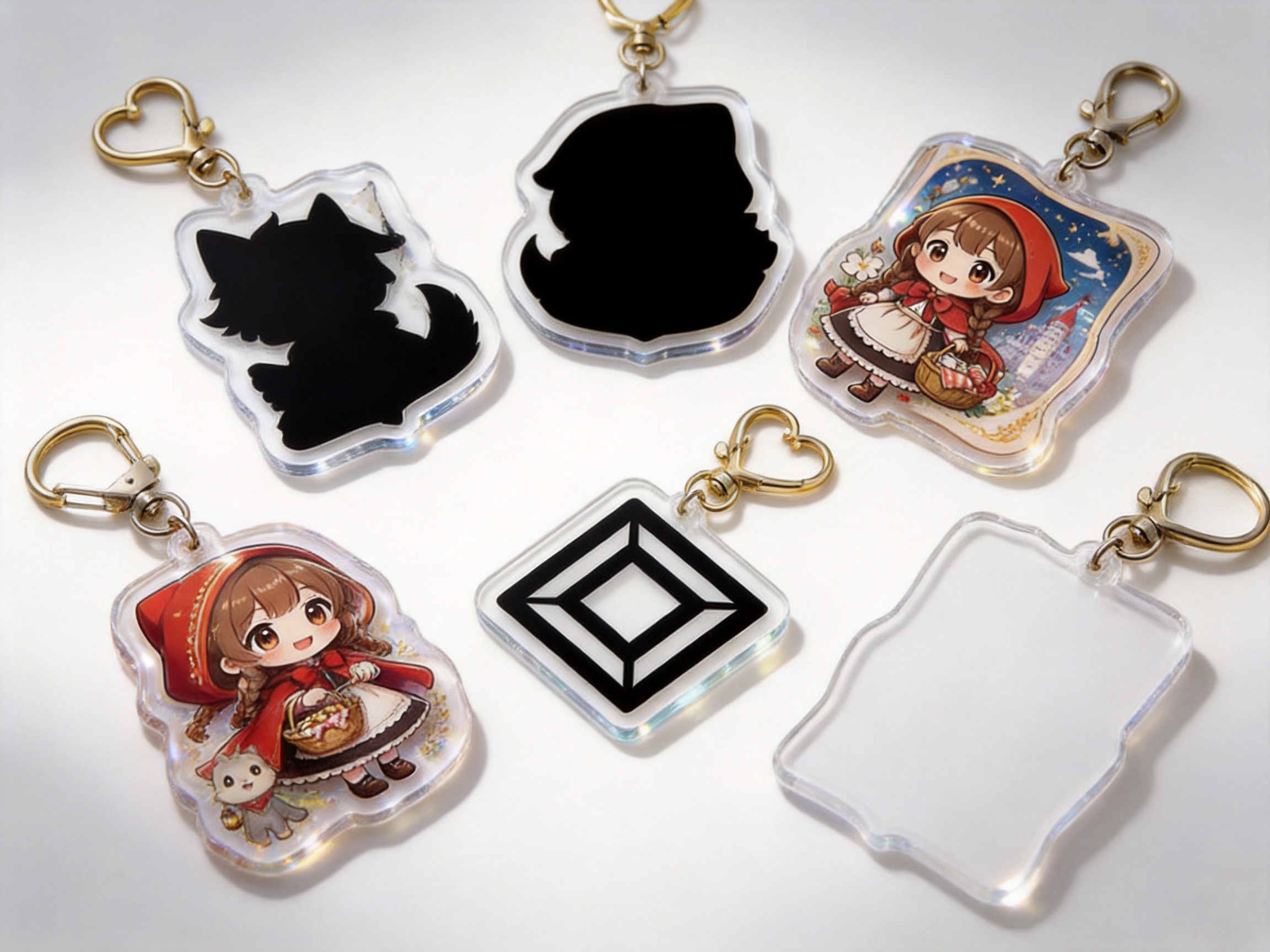
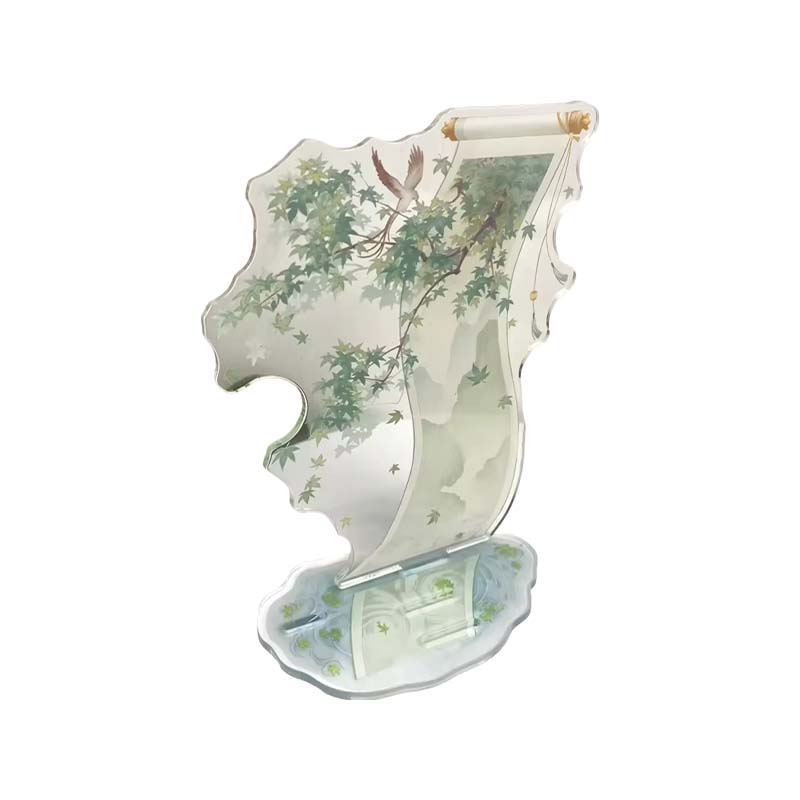
The OEM Custom Logo Acrylic Keychain is designed for buyers who want control over both appearance and function. The standard product category is acrylic keychain, while the specific shape can be irregular and fully adapted to the customer’s artwork. This makes it possible to reproduce a mascot outline, cartoon figure, product silhouette, company emblem, seasonal symbol, or campaign icon without being restricted to a basic circle, square, or rectangle.
Custom size is available according to the customer’s design and intended application. A small keychain may be appropriate for mass promotional distribution, while a larger format may be preferred for retail merchandise or character collectibles. Thickness can also influence the perceived quality, weight, rigidity, and visual presence of the finished piece. During quotation and sample development, buyers can discuss the relationship between dimensions, acrylic thickness, attachment-hole placement, packaging requirements, and target budget.
Color is customizable as well. Customers may provide specific brand colors, character palettes, seasonal tones, or coordinated color systems for a product collection. UV printing supports vivid full-color graphics, fine lines, gradients, text, and detailed illustrations. For designs that require a transparent effect, selected areas can remain clear while other sections receive printed color. This approach can create layered visual results without requiring multiple materials or complex assembly.
The product can be supplied with a custom design or developed from customer-provided artwork. Accepted file formats include AI, PSD, PDF, and SVG, with high-resolution vector artwork recommended whenever possible. Vector files are useful for maintaining clean edges during resizing, while high-resolution raster files can support detailed illustrations when prepared correctly. The production team can review design files, check cutting outlines, identify possible printing limitations, and advise on attachment-hole locations before sample approval.
Double-sided printing is a major advantage for buyers seeking a more complete presentation. The two faces can show identical artwork for a consistent appearance, or they can display different designs. For example, one side may show a logo while the other side contains a slogan, contact information, character expression, product message, or secondary illustration. Retail collections can use one side for the main character and the reverse for a series number or themed graphic. Event merchandise can place the event identity on one side and a sponsor message on the other.
Different designs on the two sides can also increase the perceived value of the product. Instead of appearing like a single flat image, the keychain becomes a two-view accessory that rewards closer inspection. This is especially useful for collectible series, licensed-style character merchandise, educational designs, tourism products, and campaign items in which both sides carry meaningful information.
Epoxy Coating for a Glossy and Protective Finish
Epoxy coating is an optional surface treatment that adds a smooth, glossy layer over the printed design. It can make colors appear richer and can create a slightly raised, tactile effect that distinguishes the keychain from a basic flat print. For promotional buyers, this finish can help the product look more premium without changing the lightweight nature of the acrylic base.
The coating also provides an additional barrier between the printed artwork and everyday contact. Keychains are frequently handled, placed in pockets or bags, and exposed to friction against other objects. A properly applied epoxy layer can help protect the image from minor scratching, moisture, and routine abrasion. It is not a substitute for unlimited heavy-duty use, but it is a valuable option for buyers who want enhanced surface resilience and a more refined appearance.
Epoxy can be applied to one side or both sides depending on the design and budget. Double-sided epoxy finishing is suitable when the reverse artwork is also important or when the buyer wants a consistent glossy appearance from every viewing angle. During production planning, the factory can evaluate the artwork, coating area, desired visual effect, curing requirements, and packaging method to reduce the risk of surface contact or damage before shipment.
Compared with uncoated printed acrylic, an epoxy-finished keychain may stand out more strongly on a retail display. Light reflects from the smooth surface, helping the product attract attention under store lighting or at an exhibition booth. The raised finish can also create a more tactile product experience, which may support a higher perceived value for premium promotional campaigns and gift collections.
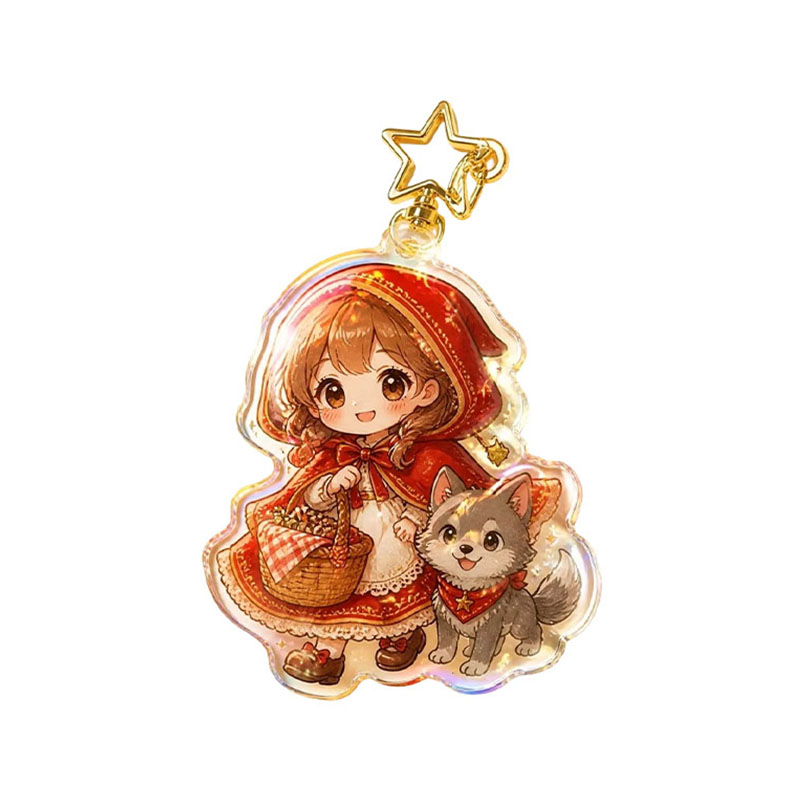
OEM Custom Logo Acrylic Keychain Epoxy Double Sided Holder
Optical-Grade Acrylic and Visual Clarity
The product uses crystal-clear acrylic selected to present printed designs with strong clarity and vividness. Clear material is important because cloudiness, inconsistent transparency, or surface imperfections can reduce the impact of a custom image. When the base is clean and well-finished, the artwork can appear sharper and the exposed areas can contribute to the design rather than distracting from it.
Acrylic clarity is particularly important for logos that include fine lettering, narrow outlines, small symbols, and color contrasts. It also matters for illustrated products in which transparent sections are part of the intended appearance. A clear material can help maintain a modern, lightweight look while allowing the printed graphic to remain the central visual feature.
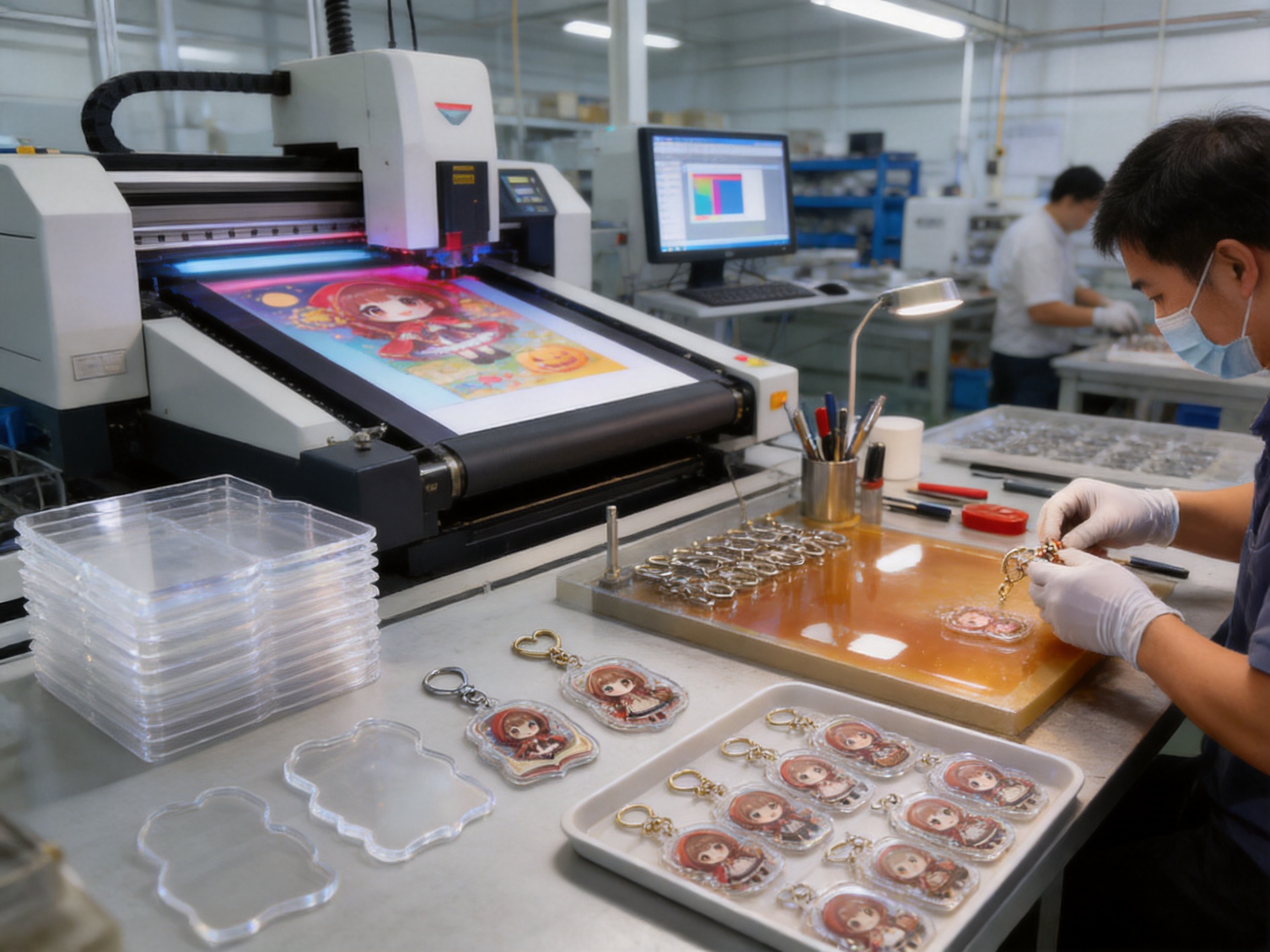
The factory’s equipment supports a complete production process that includes material preparation, design review, cutting, printing, shaping, polishing, and packaging. Each stage affects the final appearance. Material selection supports the foundation of the product, laser cutting defines the outline, printing creates the graphic, and polishing helps improve edge presentation. Combining these steps within an organized manufacturing workflow can reduce inconsistencies between separate suppliers and simplify communication for international buyers.
Fade-Resistant UV Printing
UV printing is used to transfer customized graphics directly onto the acrylic surface. UV-cured inks are hardened using ultraviolet light during the printing process, helping the printed image resist fading, scratching, and water damage under normal conditions. This is useful for keychains because the product is expected to be handled frequently and may be exposed to rain, humidity, or contact with other accessories.
Printing quality depends on more than the printer itself. Artwork preparation, color management, ink coverage, curing settings, surface cleanliness, and alignment all influence the result. The production team can check files before printing and identify areas where very small text, thin lines, or complex gradients may need adjustment. This pre-production review helps buyers avoid unnecessary sample revisions and improves the likelihood that the approved sample will accurately represent the intended production result.
Full-color UV printing allows brands to reproduce colorful illustrations, mascots, patterns, photographs, slogans, and detailed visual identities. It can support both simple one-color logos and complex artwork with multiple shades. When combined with a clear acrylic base, printed areas can be strategically arranged to create layered or floating visual effects.
For double-sided products, alignment is especially important. The front and back artwork must be positioned accurately so that the finished keychain looks intentional from both directions. The factory can coordinate the printing layout with the laser-cut outline and attachment-hole location. This is one area in which a specialized manufacturer has an advantage over a supplier that only handles basic one-sided printing.
Precision Laser Cutting and Edge Quality
Laser cutting allows the acrylic sheet to be shaped into detailed custom outlines with a high degree of repeatability. It is suitable for irregular silhouettes, internal curves, pointed features, rounded corners, and small decorative details that may be difficult to achieve consistently with less precise methods. For character merchandise, the cutting line can follow the contour of the artwork, making the finished keychain feel like a dedicated product rather than a generic blank.
Professional laser cutting also supports smooth, burr-free edges when the material, power, speed, and focus settings are correctly controlled. Clean edges improve both appearance and handling comfort. They can also help reduce the amount of manual rework required after cutting, supporting more consistent production in larger quantities.
The attachment hole is another important part of the cutting process. Its location must be strong enough to support the hardware while preserving the shape of the design. A poorly positioned hole can weaken a narrow section or interfere with the printed image. By reviewing the cut line and hole placement during the design stage, the factory can recommend adjustments that improve balance, durability, and visual proportion.
Laser cutting is also useful when a buyer requires multiple shapes in one order. A collection may include several characters, logos, or themed icons, each with a different outline. Once the artwork and production specifications have been approved, the same manufacturing system can process a coordinated product series while maintaining a consistent material, print method, and finishing standard.
Hardware and Attachment Options
The acrylic body can be paired with different keychain hardware to suit the customer’s application. Available options may include lobster clasps, swivel hooks, and split rings. Each type creates a different user experience and may be selected according to the product’s intended market, expected price point, and preferred visual style.
| Hardware Option | Typical Benefit | Suitable Applications |
|---|---|---|
| Lobster Clasp | Easy attachment and removal with a familiar retail appearance | Promotional gifts, bags, pouches, and everyday key accessories |
| Swivel Hook | Allows the attached item to rotate and can reduce twisting | Premium merchandise, luggage accessories, and event gifts |
| Split Ring | Simple, economical, and widely recognized | Mass giveaways, souvenir products, and cost-sensitive programs |
Hardware color can be coordinated with the artwork and brand style. Silver, gold, black, and other finishes may create different impressions, from clean and modern to premium and decorative. The final selection should consider the desired appearance, order quantity, application, packaging, and target cost. Buyers can also discuss whether the hardware should be assembled at the factory or packed separately for local assembly.
Attachment hardware affects more than appearance. It also influences how the keychain hangs, how easily it can be connected to a bag or ring, and how much stress is placed on the acrylic hole. For this reason, hardware matching should be reviewed together with the size and weight of the acrylic body. A suitable combination helps the finished product remain balanced during regular use.
Manufacturing Process from Artwork to Finished Product
The company operates as a source manufacturer specializing in customized acrylic cultural and creative products. Its equipment includes UV printers, engraving machines, laser cutting machines, and other production tools used to support an integrated customization workflow. This equipment allows the factory to manage several important stages internally rather than relying entirely on unrelated subcontractors.
1. Artwork Review and Technical Preparation
Production begins with the customer’s artwork, specifications, and intended application. The design team reviews the file format, image resolution, color areas, cutting outline, bleed requirements, attachment-hole position, and double-sided alignment. If the customer does not have a finalized production file, the design team can assist with preparing a suitable draft.
This stage is valuable because many quality problems originate before manufacturing begins. A logo may contain lines that are too thin for the selected size, a character may have a narrow section that cannot safely hold a hole, or the front and back images may not align correctly. Identifying these issues before cutting and printing can reduce material waste and shorten the approval cycle.
2. Sample Development
After the design is prepared, a sample can be produced for review. The sample gives the buyer an opportunity to evaluate color, scale, clarity, edge shape, hardware, epoxy coverage, and packaging suitability. For urgent projects, the company states that samples may be completed within 24 hours, depending on design complexity, confirmation speed, and production conditions.
Sample approval is particularly important for products with different front and back artwork. It allows the buyer to confirm that the two sides have the intended relationship and that no critical design elements are hidden by the attachment hardware. It also provides a reference for larger production quantities.
3. Acrylic Material Preparation
Once the design is approved, acrylic sheets are prepared according to the required size, thickness, and color. Clear acrylic may be selected for a transparent effect, while colored or opaque acrylic can be used to create a stronger background. Material preparation must account for the final cut shape, printing area, and expected waste so that the production plan remains efficient.
4. Laser Cutting and Engraving
The approved outlines are transferred to the laser cutting system. The machine creates the external shape and attachment hole with repeatable positioning. Engraving equipment may be used for selected designs or special effects when required by the customer’s specification.
After cutting, operators inspect the edges and remove any residue or unwanted material. Polishing may be performed to improve the edge finish. The goal is to produce a clean, comfortable, and visually consistent acrylic body before printing and assembly.
5. UV Printing
The acrylic pieces are cleaned and positioned for UV printing. The production team uses the approved artwork and color settings to print the front and back surfaces. Registration and alignment are checked so that the design remains correctly positioned on irregular shapes.
For double-sided printing, the printing sequence and fixture arrangement are planned carefully. This helps maintain accurate placement on both faces and reduces the chance of uneven margins or shifted details. After printing, the ink is cured using ultraviolet light to form a durable image layer.
6. Epoxy Application
If epoxy finishing is selected, the coating is applied to the specified printed surface or surfaces. The operator controls the coating amount and distribution to achieve an even glossy finish. The pieces are then cured under controlled conditions. Proper curing is important for surface hardness, clarity, and resistance to tackiness.
7. Hardware Assembly
The acrylic body is matched with the selected lobster clasp, swivel hook, split ring, or another approved attachment component. Assembly should be checked for secure connection, correct orientation, and suitable movement. The hardware should complement the product rather than cover an important portion of the artwork.
8. Inspection and Packaging
Finished keychains are inspected for print quality, shape accuracy, edge condition, epoxy appearance, hardware attachment, and general cleanliness. Approved units are then packaged according to the customer’s requirements. Individual packaging can help protect glossy surfaces and make the products ready for retail distribution or direct promotional use.
Quality Management and Production Reliability
The factory operates under an ISO 9001-certified quality management system. This certification indicates that the company maintains documented procedures intended to support consistent quality management and controlled production practices. For B-end buyers, a structured quality system can provide greater confidence than purchasing from an informal workshop with limited process documentation.
Quality control for acrylic keychains should cover the entire product rather than focusing only on the printed image. Important inspection points include acrylic clarity, cut-line accuracy, edge smoothness, print registration, color consistency, epoxy coverage, hardware connection, and packaging condition. A product can have excellent artwork but still fail commercially if the edges are rough, the clasp is poorly attached, or the glossy surface is scratched before delivery.
For repeat orders, an approved sample can serve as a visual benchmark. Buyers may also provide specific requirements for acceptable color variation, surface marks, hole position, packaging, and carton labeling. Clear standards make it easier for both parties to evaluate production results and resolve questions efficiently.
The factory’s one-stop service includes design, material cutting, printing, shaping, polishing, and packaging. Managing these stages through one coordinated source can simplify quality communication. It also allows production personnel to consider how one stage affects the next. For example, a cutting adjustment may be needed to protect a printed detail, or a packaging change may be recommended to prevent epoxy surfaces from contacting one another.
Advantages Over Basic or Generic Keychains
Many standard keychains are produced in fixed shapes with limited printing options. They may offer only one-sided graphics, minimal color selection, and a small number of hardware choices. Such products can be appropriate for simple giveaways, but they may not meet the needs of a brand that wants a close visual match to its identity.
The custom acrylic keychain provides several competitive advantages:
Greater design freedom: Irregular shapes and custom outlines allow the product to follow the customer’s artwork instead of forcing the artwork into a standard template.
Two-sided communication: Different designs can be printed on the front and back, creating more usable graphic space and a more complete presentation.
Premium surface options: Epoxy coating adds gloss, tactile depth, and an additional layer of protection compared with a basic uncoated print.
High visual clarity: Clear acrylic supports bright artwork and transparent design elements while maintaining a lightweight appearance.
Precision production: Laser cutting produces detailed outlines and smooth edges, which is valuable for character shapes and complex logos.
Flexible hardware matching: Buyers can select from common attachment styles to suit different price points and usage scenarios.
Commercial scalability: The factory supports small trial orders as well as larger production programs, allowing buyers to test a design before expanding.
Integrated service: Design support, sample creation, manufacturing, finishing, and packaging can be coordinated through one source.
These advantages are particularly relevant when the keychain is intended to represent a brand publicly. A poor-quality promotional accessory can create an unfavorable impression, while a well-finished product can strengthen the perceived professionalism of the organization distributing it.
Applications Across Different Buyer Segments
Corporate Promotional Giveaways
Companies can use logo keychains for trade shows, product launches, employee welcome kits, customer loyalty programs, conferences, and seasonal campaigns. A compact product is easy to distribute at an event and simple for recipients to use afterward. Double-sided printing can place the company logo on one face and a campaign phrase or service message on the other.
Marketing Agencies
Agencies often need merchandise that can be adapted to different clients and campaigns. The ability to change the shape, color, artwork, hardware, and packaging makes custom acrylic keychains suitable for a wide range of briefs. Agencies can order samples for client approval and then move into bulk production after the design is confirmed.
Retail Distributors and Gift Shops
Retail buyers can source themed keychains for souvenir stores, lifestyle shops, museum stores, fan merchandise collections, and independent gift retailers. Custom shapes and epoxy finishes can help a product appear more distinctive on a pegboard, countertop display, or packaged merchandise wall.
Event Planners and Campaign Organizers
Conferences, fundraisers, festivals, school activities, and nonprofit campaigns can use branded keychains as participant gifts or commemorative merchandise. The lightweight format is convenient for attendee bags, registration packages, and volunteer kits. The front and back can carry event information, sponsor recognition, or a commemorative illustration.
Character and Illustration Merchandise
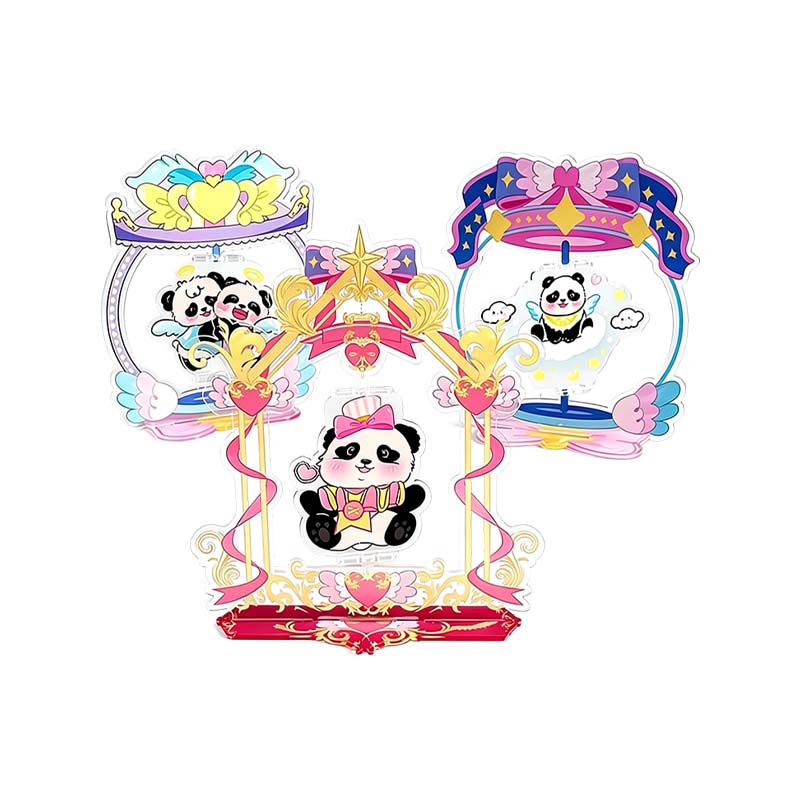
Artists, illustrators, content creators, and licensed merchandise buyers can use irregular acrylic shapes to reproduce recognizable characters and visual motifs. Double-sided artwork is suitable for showing alternate expressions, different poses, or complementary graphics. Epoxy coating can provide a more collectible appearance for limited editions and themed series.
Travel and Tourism Products
Tourist destinations, attractions, hotels, and souvenir operators can develop location-themed products using landmarks, maps, animals, local symbols, and destination lettering. The compact size makes the item easy for visitors to pack, while the clear acrylic format can support bright illustrations and modern souvenir styling.
Packaging, Shipping, and Order Planning
Packaging should be considered during the earliest stages of product development. A keychain with epoxy coating may require protective film, an individual bag, a card backing, a small box, or another method that prevents surface contact and scratching. Retail packaging may need a barcode area, product name, brand information, or a hanging hole. Promotional packaging may instead prioritize efficient bulk packing and rapid distribution.
The company offers sea freight, air freight, and express delivery options. Sea freight is generally suitable for larger, less urgent shipments, while air freight and express delivery can be considered for time-sensitive programs or smaller quantities. The appropriate method depends on order volume, required arrival date, destination, packaging dimensions, and logistics budget.
The stated lead time is approximately 30 days after order confirmation. Actual timing may vary according to design complexity, sample approval, order quantity, hardware availability, packaging requirements, and production scheduling. Buyers should provide complete artwork and specifications as early as possible, especially when merchandise is linked to a fixed event or seasonal selling period.
| Planning Item | Information Buyers Should Confirm |
|---|---|
| Artwork | Front and back files, color references, cutting outline, and text accuracy |
| Dimensions | Finished width, height, thickness, hole position, and acceptable tolerances |
| Finish | Clear or colored acrylic, UV printing, one-sided or double-sided epoxy |
| Hardware | Lobster clasp, swivel hook, split ring, color, and assembly requirements |
| Packaging | Individual bags, cards, boxes, labels, barcodes, and carton markings |
| Quantity | Trial quantity, repeat-order expectations, and final MOQ requirements |
| Delivery | Destination, required arrival date, preferred shipping method, and documentation |
For international buyers, confirming these details in writing can reduce production delays and minimize misunderstandings. It is also useful to identify which specifications are mandatory and which can be adjusted to meet budget or schedule requirements.
Minimum Order Quantity and Commercial Flexibility
The stated minimum order quantity for custom printed acrylic keychains is 50 pieces. This MOQ is accessible for both promotional campaigns and initial retail testing. A buyer can use a smaller trial order to evaluate customer response, confirm packaging, and assess the performance of a new design before committing to a larger production run.
For distributors and established brands, larger quantities may improve unit economics and support coordinated product collections. Buyers can combine several designs in a broader merchandise program, subject to the factory’s production conditions and quotation structure. It is recommended that customers clarify whether the MOQ applies per design, per size, per color, or per complete order because these conditions may affect planning.
Flexible order quantities are useful in markets where designs change frequently. A retailer may want a limited seasonal series, while a corporate buyer may require a larger quantity of one logo. The factory’s ability to support both trial orders and mass production can help buyers manage inventory risk while preserving access to professional manufacturing equipment.
How to Prepare Artwork for the Best Result
Customers should provide vector artwork whenever possible. AI, SVG, and vector-based PDF files are useful for clean cutting paths, sharp lettering, and accurate resizing. PSD files may also be accepted when prepared at an appropriate resolution with clearly organized layers. Raster artwork should be supplied at a high resolution so that small details remain clear at the final product size.
Important text should be large enough to remain readable after printing. Very thin lines, tiny gaps, and delicate internal details may become difficult to reproduce on a small keychain. Buyers should also check that the cutting outline does not remove essential portions of the artwork and that the attachment hole does not overlap important visual elements.
For double-sided products, the front and back files should be named clearly and aligned to the same reference dimensions. If the two sides are intended to match, the buyer should indicate whether the reverse image must be oriented in the same direction or rotated for viewing when the keychain hangs from the hardware. These small decisions can affect the final user experience.
Color references should be supplied when brand consistency is important. Digital screen colors and printed colors may not appear identical, so a sample review is recommended for exact expectations. If the product will be produced as a series, approving one representative sample can help establish a shared color and finish reference for the remaining designs.
Q&A About Custom Acrylic Keychains
Q1: What is the minimum order quantity?
The stated minimum order quantity is 50 pieces for custom printed acrylic keychains. Buyers should confirm whether the quantity applies to each design or to the complete order, especially when requesting multiple shapes or artwork versions.
Q2: Can the keychain have different designs on each side?
Yes. The product supports double-sided printing, and the two sides can carry different designs. Buyers can place a logo on one side and a slogan, illustration, character variation, or other graphic on the reverse side.
Q3: Is epoxy coating available on both sides?
Yes. Epoxy coating can be added as specified by the buyer, including a double-sided epoxy finish when a glossy appearance and additional surface protection are desired on both faces.
Q4: What artwork file formats are accepted?
AI, PSD, PDF, and SVG files are accepted. High-resolution vector artwork is recommended because it supports clean resizing, sharp edges, and accurate cutting outlines.
Q5: Can the shape be different from a standard circle or rectangle?
Yes. The product can be produced in irregular and custom shapes. The outline may follow a logo, mascot, cartoon figure, symbol, product profile, or another approved design.
Q6: What hardware options are available?
Common options include lobster clasps, swivel hooks, and split rings. The final hardware can be selected according to the intended use, appearance, budget, and packaging requirements.
Q7: Can the acrylic color be customized?
Yes. The product can use clear acrylic, selected colored acrylic, or a custom color arrangement in line with the design requirements. Printing can also provide additional color effects on the surface.
Q8: How durable is the printed design?
UV-cured printing is designed to resist fading, scratching, and water damage under normal use. Epoxy coating can provide another protective layer and a glossy finish. Actual service life depends on exposure, handling, storage, and the selected specification.
Q9: How long is the production lead time?
The stated lead time is approximately 30 days after order confirmation. The actual schedule may depend on artwork approval, sample confirmation, order quantity, finishing, packaging, and shipping arrangements.
Q10: Can samples be produced before mass production?
Yes. Sample development is recommended for confirming color, size, cutting, hardware, double-sided alignment, epoxy appearance, and packaging. The company states that urgent samples may be completed within 24 hours, subject to design complexity and confirmation speed.
Q11: Which shipping methods are available?
Sea freight, air freight, and express delivery are available. The best option depends on order size, destination, urgency, packaging volume, and logistics budget.
Q12: Which payment terms are accepted?
The stated payment terms include T/T and L/C at sight. Buyers should confirm the detailed payment schedule and commercial terms when requesting a quotation.
Q13: Is the product suitable for retail resale?
Yes. Custom acrylic keychains are suitable for souvenir shops, gift stores, retail distributors, lifestyle stores, and other resale channels. Individual packaging, custom cards, labels, and coordinated collections can be discussed for retail presentation.
Q14: What makes this product suitable for corporate promotions?
The product is lightweight, practical, easy to distribute, and highly customizable. A company can place its logo, campaign message, mascot, or event graphic on one or both sides and select packaging that suits an exhibition, loyalty program, employee gift, or customer giveaway.
Q15: Can the factory assist with design development?
Yes. The company has an experienced graphic design team serving international clients and can assist with design preparation and technical adjustments. Customers should provide the desired concept, logo, text, dimensions, and intended application for review.
Why Choose an Integrated Chinese OEM Factory
Working directly with a source manufacturer can provide advantages for buyers who need customization, repeatability, and direct production communication. Instead of selecting a finished item from a trading catalog, the buyer can participate in decisions about acrylic material, printing, shape, coating, hardware, packaging, and shipping.
China has a large manufacturing base for acrylic cultural and creative products, supported by specialized equipment, experienced operators, and established export logistics. A factory located in Wenzhou, Zhejiang, can serve international customers while coordinating production and shipping from an established industrial region.
The company serves clients in South Korea, Japan, the United States, and other international markets. Experience with overseas buyers can be useful when discussing artwork files, product specifications, packaging labels, payment procedures, inspection expectations, and export delivery. Responsive communication is especially important for custom products because a small design change can affect cutting, printing, assembly, and packaging.
The company’s stated capabilities include design drafts within approximately two hours for suitable projects, urgent sample completion within 24 hours, small trial orders, mass production, special finishes, quality control, and after-sales support. These capabilities are relevant to buyers who need a balance between speed and customization rather than choosing between a fast generic product and a slow bespoke product.
The factory’s product range also includes acrylic standees, clips, fridge magnets, display cases, metal badges, wall hooks, and other acrylic gifts. This broader category experience can be useful for buyers planning a coordinated merchandise program. A brand may use the same artwork across keychains, standees, magnets, and display products while maintaining a consistent visual identity and supplier relationship.
Recommended Buying Workflow
A reliable purchasing process begins with a complete design brief. The buyer should identify the purpose of the product, target audience, expected quantity, preferred dimensions, artwork requirements, finish, hardware, packaging, destination, and required delivery date. Clear information at the beginning makes it easier for the factory to recommend a practical specification.
The next step is file review and quotation. The factory can assess the artwork and determine whether the requested shape, size, printing, epoxy, and hardware combination is technically suitable. If adjustments are required, they can be made before the quotation is finalized or before the sample is produced.
After sample approval, the buyer should confirm the purchase order, payment terms, packaging details, shipping method, and quality reference. The approved sample should be retained as a reference for the production team and the buyer’s receiving inspection.
During production, buyers may request progress updates according to the agreed communication plan. For larger or time-sensitive orders, it can be useful to confirm the expected completion date before arranging final transportation. Once the goods are packed, shipping documents and carton information should be checked carefully to support smooth delivery and receiving.
After delivery, the buyer should inspect representative units for color, shape, hardware, epoxy, packaging, and quantity. Any issues should be documented with photographs and production references so that the factory can investigate efficiently. A clear feedback process helps improve repeat orders and supports long-term cooperation.
Conclusion
The OEM Custom Logo Acrylic Keychain Epoxy Double Sided Holder is a versatile solution for businesses that need customized promotional merchandise, branded gifts, character accessories, or retail-ready products. Its main strengths include crystal-clear acrylic, vivid UV printing, irregular shape customization, double-sided artwork, optional epoxy coating, precision laser cutting, smooth edges, and multiple hardware choices.
For B-end buyers, the product’s value comes from the complete service behind the finished item. The company supports artwork preparation, sampling, cutting, printing, shaping, polishing, hardware assembly, quality inspection, packaging, and international delivery. Its ISO 9001-certified quality management system, specialized equipment, experienced design team, and capacity for both trial orders and larger production programs provide a structured foundation for commercial purchasing.
Whether used as a corporate giveaway, event souvenir, retail accessory, campaign item, or collectible character product, a custom acrylic keychain can extend brand visibility through everyday use. By combining thoughtful artwork preparation with suitable materials, precision manufacturing, protective finishing, and appropriate packaging, buyers can create an accessory that is attractive, practical, and suitable for repeat commercial supply.
References
1. Product specification and customization information supplied for the OEM Custom Logo Acrylic Keychain Epoxy Double Sided Holder.
2. Company-provided manufacturing profile covering acrylic cutting, UV printing, engraving, polishing, packaging, design support, and international order service.
3. ISO 9001 quality management principles for consistent production processes and documented quality control.
4. General technical guidance on acrylic sheet fabrication, laser cutting, UV-cured printing, epoxy surface finishing, and promotional merchandise development.
5. General packaging and logistics planning principles for lightweight customized accessories and international bulk shipments.
Product: OEM Custom Logo Acrylic Keychain Epoxy Double Sided Holder

Ready to Begin?
Product Categories
Contact Information
 Email:
kaelissia.shop@gmail.com
 Phone:
+86-18968933800
 Address:
No.515, Lingxi Strait Avenue, Cangnan, Wenzhou, Zhejiang, China
QR Code
Copyright © Wenzhou Chuangheng Packaging Co., Ltd. All rights reserved.
