 +86-18968933800
 No.515, Lingxi Strait Avenue, Cangnan, Wenzhou, Zhejiang, China


 English
 Français
 Español
 Deutsch
Blog ·
Blog ·
Blog ·
Blog ·
Blog ·
Blog ·
Blog ·
Blog ·
Blog ·
Blog ·
Blog ·
Blog ·
Blog ·
Blog ·
Blog ·
Blog ·

Double-Sided Acrylic Photo Frame Keychain: A Custom Merchandise Solution for Modern Brands
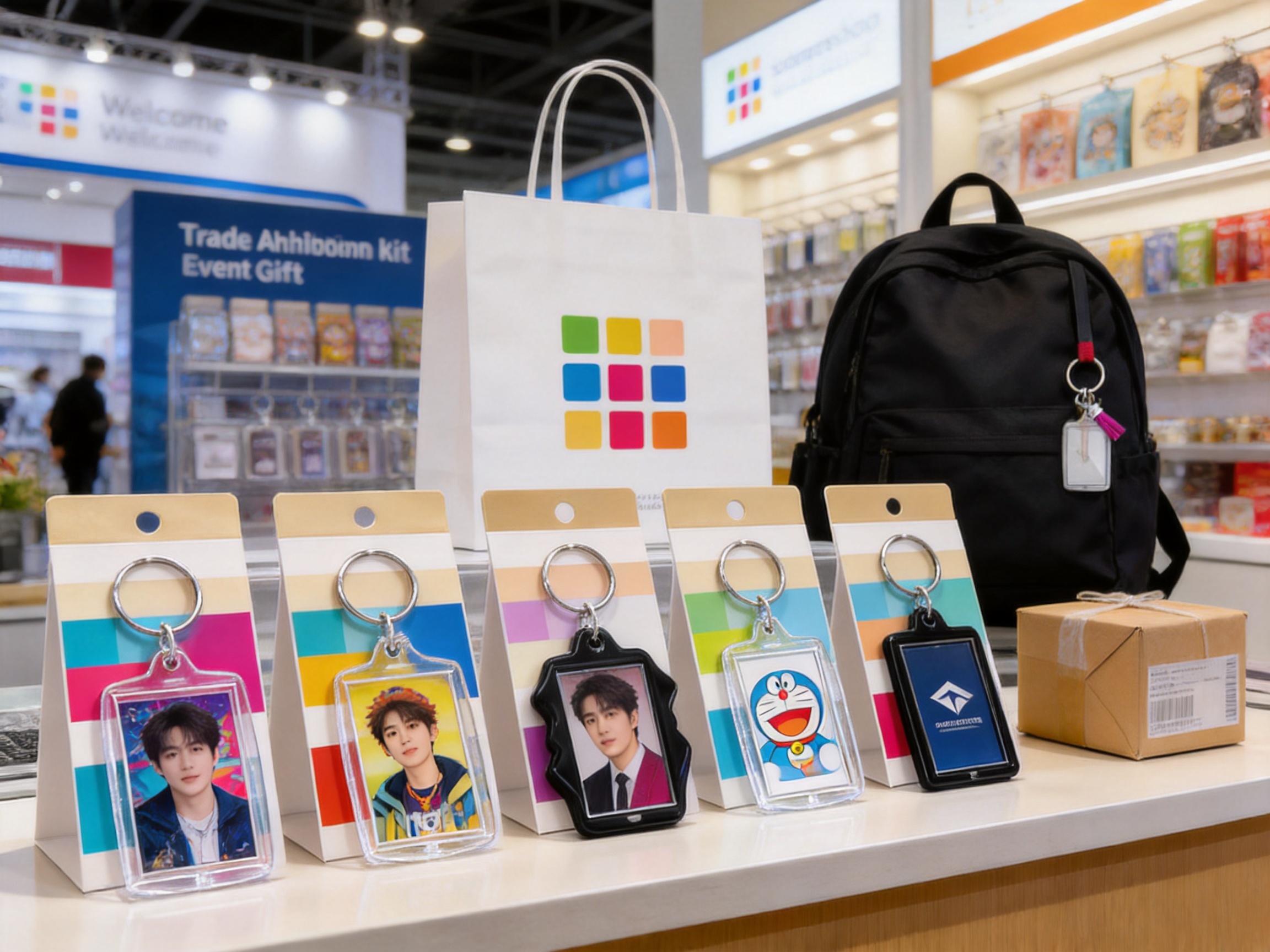
In a competitive promotional products market, a successful giveaway must do more than display a logo. It should be attractive, practical, durable, easy to distribute, and memorable enough to remain in daily use. The double-sided acrylic photo frame keychain combines these qualities in one compact product. It functions as a key accessory, a miniature photo frame, a collectible charm, and a customizable promotional item.
Designed for brands, retailers, event organizers, marketing agencies, and importers, this acrylic keychain provides a flexible surface for photographs, illustrations, logos, slogans, character artwork, campaign graphics, and other visual content. Its double-layer structure protects the inserted image while maintaining a bright, crystal-clear appearance. At the same time, its lightweight construction makes it convenient for everyday carrying, retail packaging, event distribution, and international shipment.
Unlike ordinary single-sided printed keychains, this product is developed around a photo-frame concept. The two acrylic layers create a protective enclosure, allowing an image or printed insert to remain visible while receiving improved protection from scratches, dust, and moisture. Different designs can also be used on the front and back, giving brands more space to communicate their identity and giving consumers a more interesting accessory to use or collect.
For professional buyers, the product is supported by comprehensive OEM and ODM services. These services include artwork preparation, custom shape development, logo printing, photo-frame sizing, epoxy coating, hardware selection, packaging customization, sampling, and bulk manufacturing. The complete process is managed by an experienced source manufacturer with equipment for printing, engraving, laser cutting, shaping, polishing, and packaging.
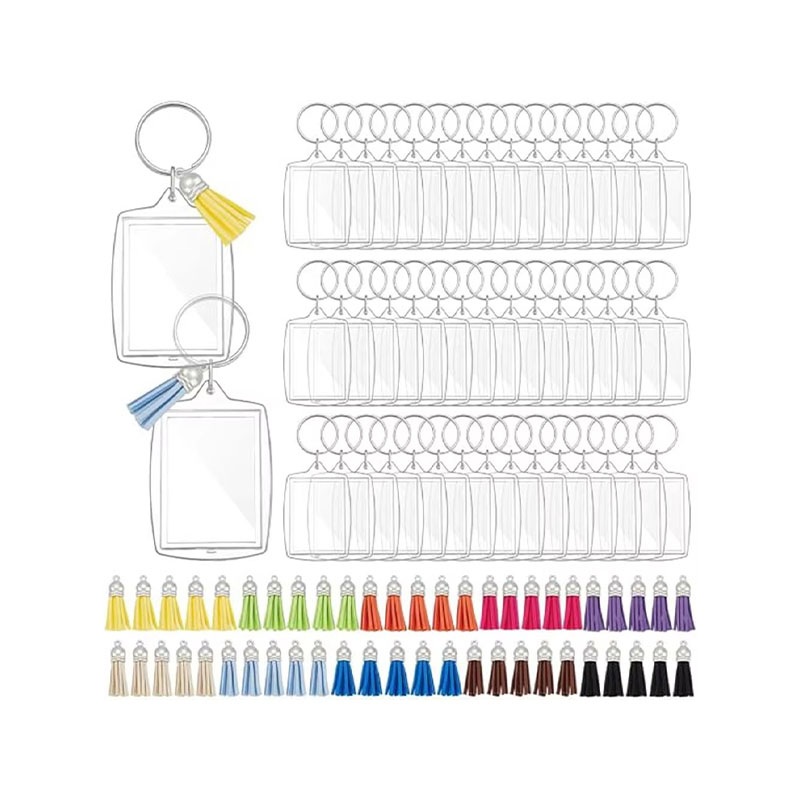
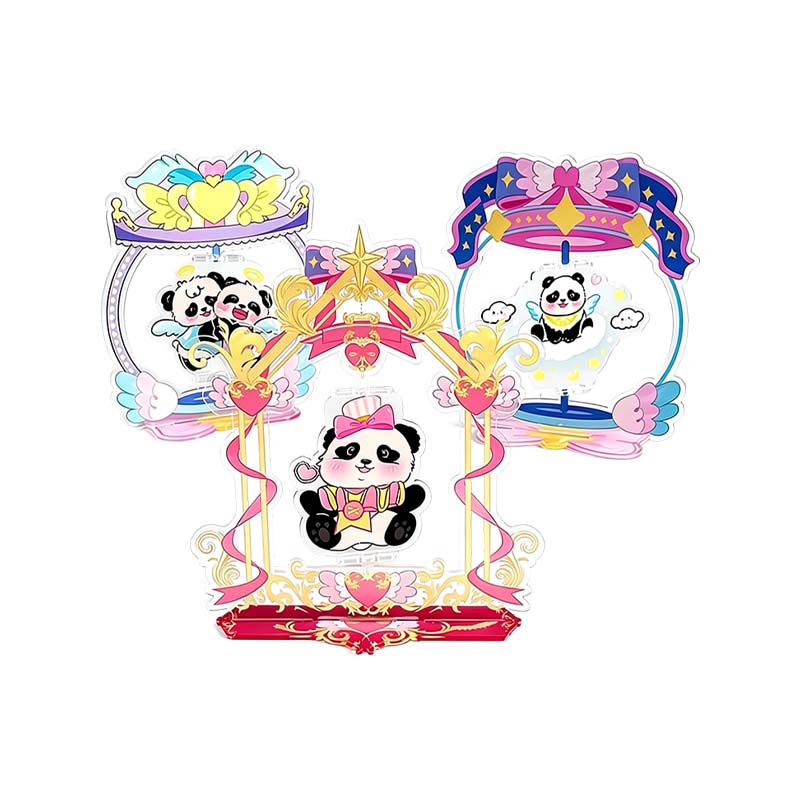
Double Sided Acrylic Photo Frame Keychain Craft Accessory
What Is a Double-Sided Acrylic Photo Frame Keychain?
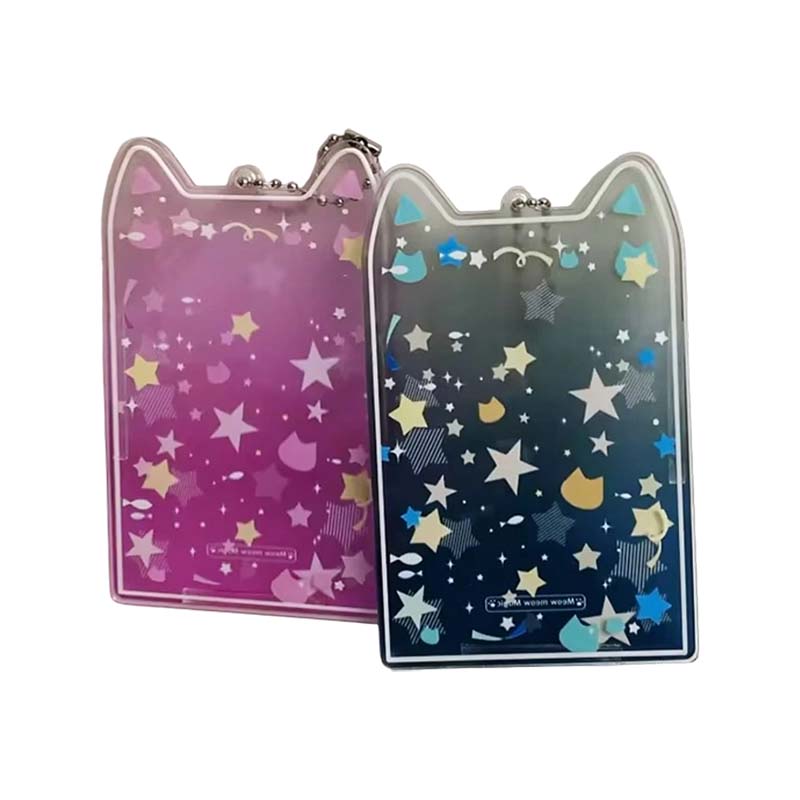
A double-sided acrylic photo frame keychain is a compact accessory made from clear acrylic components assembled around a photo, printed card, decorative insert, or customized visual design. The product is fitted with keychain hardware so that it can be attached to keys, handbags, backpacks, zipper pulls, luggage, badge holders, and other personal items.
The main body uses optical-grade acrylic selected for clarity and visual brightness. Compared with opaque plastic accessories, transparent acrylic allows the displayed image to remain the central focus. Light passes through the material, helping photographs and artwork appear vivid. This makes the keychain particularly suitable for colorful characters, product mascots, family photographs, travel memories, event graphics, and brand illustrations.
The double-layer construction is one of the product’s defining characteristics. Instead of printing on only one exposed surface, the design creates a framed space between or within two acrylic layers. This structure helps shield the photo or insert from direct contact with surrounding objects. It also provides a more substantial appearance than a thin, flat printed charm.
Different designs can be displayed on each side. For example, one side may present a company logo while the reverse side shows a slogan, QR-style campaign graphic, product illustration, or seasonal message. For entertainment and character merchandise, the front may feature a character portrait and the back may show a secondary illustration or collection number. For personal gifts, two photographs or a photograph and a message can be combined in the same accessory.
The frame can be produced in different sizes and shapes according to the intended photo dimensions and artwork requirements. Standard rectangular, square, rounded, circular, and custom silhouette formats can be considered during the design stage. Precision cutting and finishing help ensure that the frame, insert, and hardware are properly matched.
Why Acrylic Is an Effective Material for Promotional Keychains
Acrylic is widely used in promotional products because it offers an effective balance of appearance, workability, and durability. It is lighter than glass, easier to cut into detailed shapes, and suitable for high-resolution printing and engraving. These properties allow manufacturers to create visually complex products without making them unnecessarily heavy or difficult to carry.
Clarity is one of acrylic’s most important advantages. A clear acrylic surface allows colors and images to remain visible from different angles. When the design is printed with suitable ink and carefully aligned, the result can have a bright, polished appearance that supports premium brand presentation.
Acrylic also supports a broad range of processing techniques. It can be laser cut, mechanically machined, polished, printed, engraved, shaped, and assembled into multi-layer products. This flexibility is valuable for OEM and ODM projects because the same material can support many product styles, including keychains, standees, clips, fridge magnets, display cases, wall hooks, and decorative gifts.
For buyers managing multiple product categories, acrylic provides a consistent visual language across a product collection. A company may use the same logo treatment, color palette, character artwork, or packaging style on a keychain and then extend it to a standee, badge, magnet, or display case. This consistency can improve campaign recognition and simplify the development of related merchandise.
The relatively low weight of acrylic is also important for promotional distribution. A keychain weighing approximately 0.025 kilograms per unit can be distributed at conferences, exhibitions, retail counters, charity events, membership programs, and customer loyalty campaigns without creating excessive logistical burden.
Competitive Advantages of the Double-Sided Design
More Communication Space
A common limitation of basic promotional keychains is that they provide only one main printable surface. The double-sided photo frame format gives buyers more room to communicate. One side can show a logo, while the other carries contact information, a campaign theme, a product message, or a complementary visual.
This additional surface area can be particularly useful when a campaign requires both branding and storytelling. A tourism organization, for example, could place a destination image on one side and a short promotional message on the other. A retail brand could display a mascot on the front and a seasonal collection mark on the back. A conference organizer could use one side for the event identity and the other for the event date or sponsor recognition.
Improved Protection for Photos and Inserts
Because the photo or insert is enclosed by a double-layer acrylic structure, it is less exposed to direct scratching, dust, and moisture than a loose paper insert. The protective construction helps maintain the visual quality of the image during daily use, transport, storage, and retail handling.
This advantage is meaningful for products intended to preserve personal photographs or limited-edition artwork. A photo keychain is not only a promotional object; it may also carry emotional or collectible value. The frame structure helps create a more secure presentation than an unprotected paper tag attached to a conventional key ring.
Premium Visual Presentation
The transparent material and layered structure create depth and a more refined appearance. Compared with a simple printed plastic tag, the product can look closer to a miniature display object. This makes it suitable for brands that want a promotional item to communicate quality rather than function only as a low-cost giveaway.
The clear frame also allows artwork to remain visually prominent. When the product is produced with accurate cutting, clean edges, and high-fidelity printing, the finished accessory can support the appearance of a premium merchandise line.
Flexible Hardware Options
The keychain can be matched with different attachment components, including swivel hooks and lobster clasps. Hardware selection can be based on the product’s intended use, target price, visual style, and packaging requirements.
A swivel hook can offer convenient rotation and a practical attachment method for bags or belt loops. A lobster clasp can provide a familiar and compact connection for keys, pouches, and zipper pulls. Additional hardware options may be reviewed during the quotation and sampling stages so that the final product is appropriately matched to the buyer’s application.
Suitable for Both Personal and Commercial Use
Many promotional products serve only one market. This photo frame keychain can be adapted for several applications. It may be sold as a personalized gift, distributed as a brand giveaway, included in an event kit, or stocked by a souvenir shop. The same base construction can support different artwork, packaging, hardware, and order quantities.
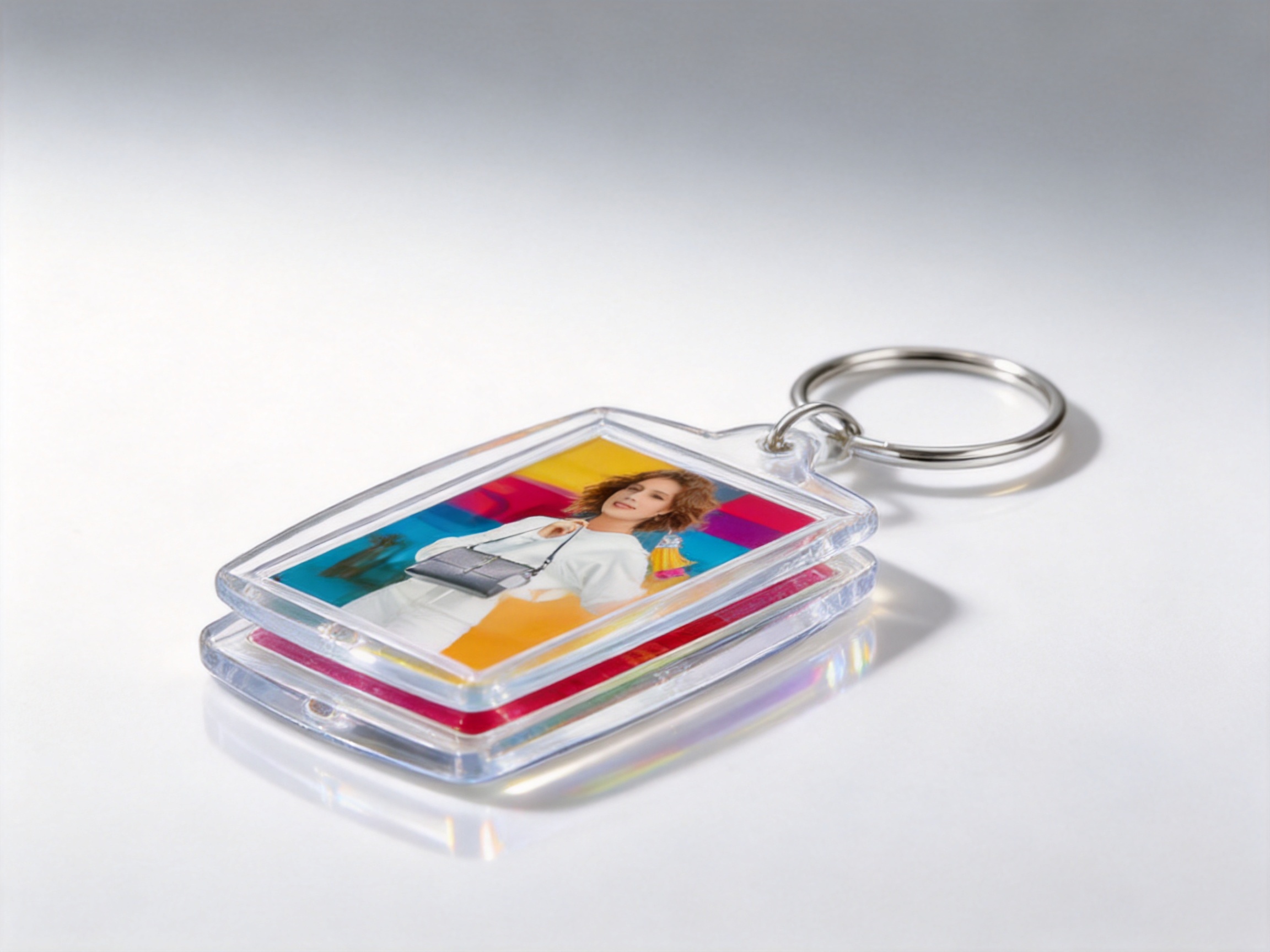
Applications Across Promotional and Retail Markets
Corporate Promotional Giveaways
Brands, marketing agencies, and corporate procurement teams can use custom acrylic photo frame keychains for exhibitions, product launches, employee recognition programs, customer loyalty campaigns, and seasonal promotions. The product offers a practical way to place a logo or campaign image in the hands of a target audience.
Because the keychain is small and easy to distribute, it can be included in welcome bags, conference packs, purchase packages, press kits, and direct-mail campaigns. The frame format also creates opportunities for more meaningful branding. Instead of using only a logo, a company can add a photograph, product image, mascot, or visual message that supports the campaign’s theme.
Events and Conferences
Event planners can customize the keychain with event names, dates, locations, speaker graphics, sponsor marks, or participant information. It can be used as a registration gift, volunteer accessory, sponsor item, or commemorative souvenir.
For conferences with multiple sponsors, the two sides can be used to balance event identity and sponsor exposure. For nonprofit events and fundraisers, the keychain can present the organization’s message on one side and a campaign image on the other. Its compact size makes it simple to include in event materials without requiring additional storage space.
Retail Resale and Souvenir Merchandise
Retail distributors, souvenir stores, gift shops, and online sellers can source bulk customizable keychains for resale. Custom shape options and photo-frame functionality allow merchants to create product lines related to destinations, attractions, characters, sports themes, school communities, festivals, and local culture.
A retailer may offer multiple designs within one collection. Each design can use the same frame format while changing the image, color, hardware, and packaging. This approach supports collection-based purchasing and encourages customers to buy more than one item.
Character and Creative Merchandise
Illustrators, designers, content creators, and creative brands can use the product to produce collectible merchandise. The double-sided format is useful for presenting a character from two angles, showing front and reverse artwork, or combining a main illustration with a signature, logo, or collection mark.
Epoxy coating can be added when a glossy surface and additional visual depth are desired. Depending on the artwork and product positioning, buyers may select a clean transparent finish, a printed design, a layered composition, or a combination of printing and epoxy treatment.
Employee and Customer Gifts
Companies can develop personalized keychains for employee anniversaries, team-building programs, corporate celebrations, or customer appreciation campaigns. A photo frame format may be used for group images, company milestones, product launches, or commemorative events.
For customer loyalty programs, the item can be offered as a reward for purchases or membership activity. Its small size and everyday usefulness help keep the brand visible after the initial campaign has ended.
Customization Capabilities for OEM and ODM Projects
Professional buyers often require more than a standard product with a logo. They may need a particular silhouette, size, print method, hardware combination, finish, and packaging format. The manufacturer supports these requirements through a complete OEM and ODM workflow.
Design and Artwork Development
Customers may provide finished artwork or request assistance with product design. Accepted file formats include AI, PSD, PDF, and SVG. High-resolution vector files are recommended because they help maintain sharp outlines, accurate shapes, and consistent printing quality.
An experienced graphic design team can review the artwork, identify production issues, and prepare design drafts. The service is useful when artwork must be adapted to a small format, when different front and back designs need alignment, or when the photo-frame opening must be adjusted to a specific image size.
According to the supplied company information, design drafts can be prepared within approximately two hours for suitable projects, while urgent samples may be completed within approximately 24 hours. Actual timing depends on artwork complexity, approval speed, material availability, and sample requirements.
Custom Shape and Size
Custom cutting allows the keychain to follow a brand logo, character outline, product silhouette, geographic shape, or other creative concept. The photo window can also be adjusted to accommodate different dimensions.
Precision machining is important because the frame must remain balanced and visually clean after cutting. Accurate dimensions help ensure that the insert fits correctly and that the attachment hardware is positioned appropriately. A well-planned design also considers corner radius, hole placement, edge finish, layer alignment, and the relationship between the artwork and the outer contour.
Printing and Surface Effects
Full-color printing can be used for logos, photographs, illustrations, patterns, and campaign graphics. UV printing equipment supports direct printing on acrylic surfaces and can help produce vivid colors and detailed images.
For projects requiring a more dimensional or glossy appearance, epoxy coating can be added. Epoxy can protect the printed surface and create a smooth, polished finish. Buyers should confirm whether the coating is required on one side or both sides, whether it should cover the entire design, and how it will affect the final thickness and cost.
Other possible design decisions include transparent areas, white ink underprinting, layered color effects, engraved details, and a combination of printing and cutting. The most suitable process depends on the artwork, order quantity, target price, and expected use.
Hardware Matching
Hardware is not a minor detail in a keychain project. It affects usability, appearance, perceived quality, and packaging. The manufacturer can match the acrylic component with swivel hooks, lobster clasps, rings, and other suitable attachment parts.
Hardware color may be selected to support the design, such as silver, gold, black, or other finishes. Buyers should consider whether the item will be used with keys, bags, luggage, or display packaging. The chosen connector should be tested for smooth operation and secure attachment before mass production.
Packaging Customization
Personalized packaging helps transform a basic accessory into a complete merchandise product. Options may include individual polybags, paper cards, header cards, backing cards, branded envelopes, gift boxes, barcode labels, and retail-ready packaging.
Packaging can also protect the acrylic surface during transportation and storage. For retail resale, the packaging may include product information, collection details, care guidance, or a brand story. For event distribution, simple lightweight packaging may be preferred to reduce handling time and shipping volume.
Advanced Manufacturing Process
The manufacturer operates a one-stop production system that covers design, material cutting, printing, shaping, polishing, assembly, quality control, and packaging. Managing these stages within one coordinated supply chain helps reduce communication gaps and supports more consistent results between samples and bulk orders.
1. Project Consultation and Specification Review
Each order begins with a review of the product concept. The buyer’s artwork, target size, quantity, application, preferred hardware, packaging requirements, and delivery schedule are evaluated. This stage helps identify technical issues before materials are cut or printed.
Important questions include whether the product will contain a removable photo insert, whether the front and back require different designs, whether the frame needs a specific internal opening, and whether the keychain will be sold in retail packaging or distributed as a promotional giveaway.
2. Artwork Preparation
Artwork is checked for resolution, color composition, bleed, cutting lines, transparent areas, and front-to-back alignment. When necessary, the design team prepares a digital draft or production proof for approval.
Small products require careful artwork adjustment. Fine lines that appear clear on a computer screen may become difficult to reproduce at keychain size. The design team can help improve visual hierarchy by simplifying overly complex details, increasing contrast, and ensuring that essential logos or text remain legible.
3. Material Selection and Cutting
Optical-grade acrylic is selected for clarity and visual presentation. Laser cutting machines and other specialized equipment are used to create the required shape. Computer-controlled cutting supports repeatability and allows the manufacturer to produce detailed contours, internal openings, rounded corners, and custom silhouettes.
Clean cutting is essential for a product that will be handled frequently. The supplied company information emphasizes smooth, burr-free cutting. This helps improve edge appearance and reduces the risk of rough areas affecting assembly, packaging, or customer handling.
4. Printing and Engraving
After cutting and surface preparation, the acrylic components can be printed or engraved according to the approved artwork. UV printing is suitable for vibrant full-color graphics and detailed logos. Engraving can be used for subtle markings, names, serial details, or decorative linework.
The front and reverse sides are processed according to the approved design plan. When two different images are required, alignment and orientation must be carefully checked so that both sides appear correct when viewed in normal use.
5. Shaping and Finishing
Depending on the design, acrylic parts may receive additional shaping, edge polishing, or surface treatment. Polishing improves the appearance of cut edges and contributes to the product’s clean, transparent look.
Special finishes such as epoxy coating can be applied after printing. The coating process must be controlled to achieve a smooth surface without unwanted bubbles, uneven thickness, or contamination. Finish requirements should be confirmed during sampling because they influence the product’s tactile feel and visual character.
6. Layer Assembly
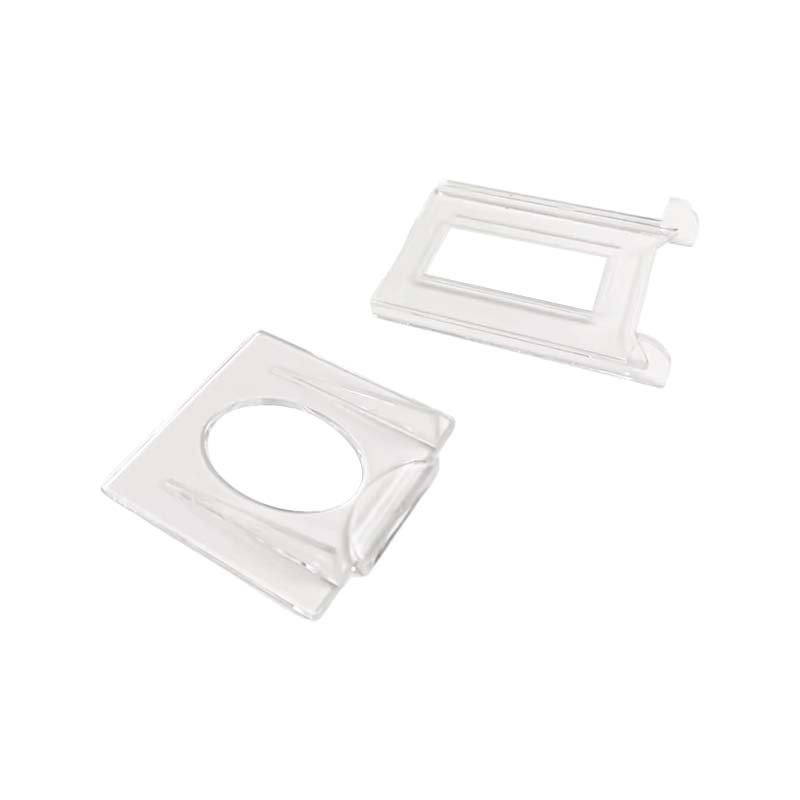
The photo-frame structure is assembled by aligning the acrylic layers and preparing the space for the photo or insert. The assembly method depends on whether the insert is permanent, removable, or replaceable.
Alignment is especially important for double-sided products. The outer edges, internal frame opening, printed artwork, and hardware hole should correspond accurately. Careful assembly helps maintain a balanced appearance and prevents the photo from shifting during normal use.
7. Hardware Installation
The selected clasp, hook, or ring is attached after the acrylic component has been checked. Installation should be secure while allowing the hardware to move or rotate as intended. The connection point must be positioned to support the product’s weight and avoid unnecessary stress on the acrylic.
8. Inspection and Packaging
Finished units are inspected for clarity, cutting quality, print accuracy, color consistency, alignment, hardware attachment, surface finish, and packaging condition. Approved products are then packed according to the customer’s requirements.
An ISO 9001-certified factory quality management system supports standardized production procedures and documented quality control. Certification does not replace product-specific inspection, but it demonstrates that manufacturing activities are organized within a recognized quality management framework.
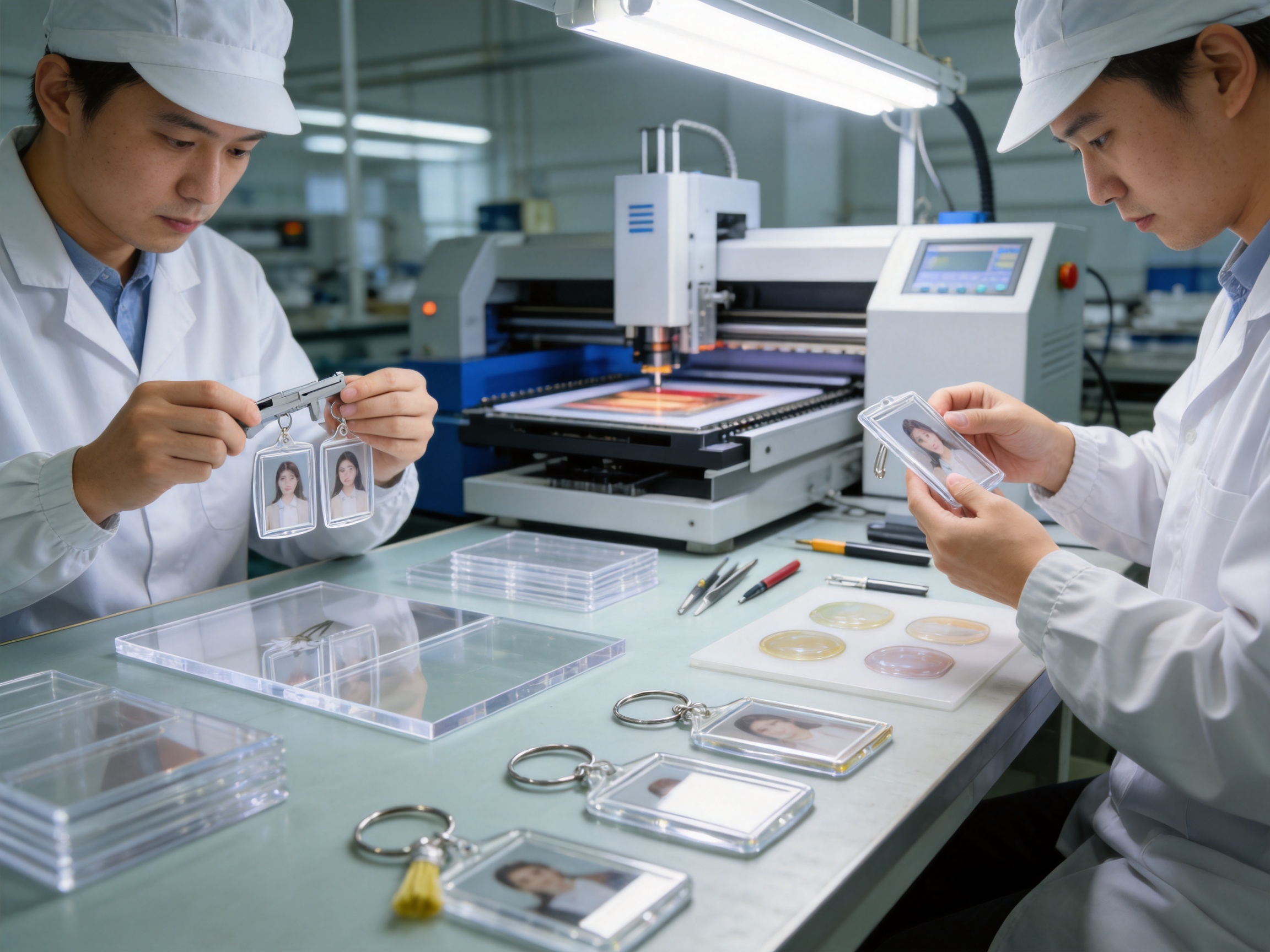
Quality and Durability Considerations
Quality in an acrylic keychain project is determined by multiple factors rather than by material choice alone. The acrylic must be clear and properly cut, the printing must be accurate, the layers must be aligned, the hardware must be secure, and the packaging must protect the finished units.
Optical-grade acrylic supports a bright appearance and helps the inserted photo remain visible. Smooth edges improve both aesthetics and handling. Accurate printing preserves the intended brand colors and artwork details. Proper assembly helps prevent dust or movement from reducing the visual quality of the photo frame.
Buyers should also consider how the product will be used. A keychain attached to a handbag may experience more movement and contact than one placed in a gift box. A retail product may need stronger packaging than an event giveaway. If the item is expected to remain outdoors for extended periods, the buyer should discuss environmental exposure, ink suitability, coating, and care requirements during product development.
Before mass production, a physical sample is recommended. The sample allows the buyer to verify the photo opening, overall thickness, color output, clasp operation, edge finish, packaging fit, and visual balance. It also provides an opportunity to check whether text remains legible and whether the design looks correct from both sides.
Production Capacity and International Supply Support
Wenzhou Chuangheng Packaging Co., Ltd. is based in Zhejiang, China, and serves international clients in markets including South Korea, Japan, the United States, and other regions. Its production capabilities cover a range of customized acrylic cultural and creative products rather than a single item category.
The factory is equipped with UV printers, engraving machines, laser cutting machines, and other specialized equipment. This equipment supports a complete workflow from digital artwork to finished merchandise. In-house or coordinated control of multiple stages can help reduce the need for buyers to manage separate suppliers for cutting, printing, finishing, assembly, and packing.
The company provides support for both small trial orders and mass production. This is useful for buyers who want to test a design before committing to a larger quantity. A trial order can help evaluate customer response, packaging performance, price positioning, and artwork effectiveness.
For approved orders, the standard lead time is approximately 30 days after order confirmation. The actual production schedule may vary according to quantity, design complexity, material requirements, hardware availability, packaging specifications, and approval timing. Sea freight, air freight, and express delivery are available, allowing buyers to select a shipping method according to cost and urgency.
Payment terms include T/T and L/C at sight. These arrangements can support different procurement structures, from direct factory purchasing to larger international sourcing programs.
Product and Logistics Reference Table
| Item | Reference Information |
| Product category | Acrylic keychain |
| Primary material | Optical-grade acrylic and compatible plastic components |
| Product structure | Double-sided acrylic photo frame construction |
| Customization | Artwork, logo, shape, size, printing, epoxy coating, hardware, and packaging |
| Available hardware | Swivel hooks, lobster clasps, and other compatible options |
| Recommended artwork formats | AI, PSD, PDF, and SVG |
| Minimum order quantity | 50 pieces for custom printed acrylic keychains |
| Approximate lead time | 30 days after order confirmation |
| Shipping methods | Sea freight, air freight, and express delivery |
| Payment terms | T/T and L/C at sight |
| Sales unit | Single piece |
| Package dimensions | Approximately 12 × 9 × 4 centimeters |
| Gross weight per unit | Approximately 0.025 kilograms |
| Quality system | ISO 9001-certified factory quality management system |
| Origin | Zhejiang, China |
How This Product Compares with Basic Acrylic Keychains
Basic acrylic keychains are often produced as flat printed shapes with a single decorative surface. They can be economical and attractive, but they may provide less protection for photos and fewer opportunities for front-and-back communication. The double-sided photo frame design adds a functional element by creating a protected display area.
Compared with a paper insert attached to a conventional metal ring, the framed structure offers a more finished appearance. The image is presented as part of the product rather than as a loose label. This difference can be valuable when the item is intended for retail sale or when the promotional campaign emphasizes quality and long-term use.
Compared with glass photo accessories, acrylic offers lower weight and greater design flexibility. It is less fragile in ordinary handling and can be cut into custom shapes more easily. This makes it more suitable for keychain use, large-scale promotional distribution, and international shipping.
Compared with single-layer printed plastic products, the transparent layered construction can create stronger visual depth and a more premium feel. It also allows a photo or insert to be displayed while remaining partially protected from everyday contact.
The product’s strongest competitive advantage is therefore not one isolated feature. It is the combination of a clear acrylic material, double-sided photo-frame construction, custom printing, flexible hardware, professional finishing, and a complete manufacturing service.
Ordering Process for Buyers
Step One: Define the Application
Buyers should first identify how the keychain will be used. A conference giveaway may require lightweight packaging and a simple logo. A retail product may require premium finishing, a custom backing card, and stronger packaging. A collectible merchandise project may need multiple designs, individual numbering, and carefully matched hardware.
Step Two: Prepare Artwork and Product Requirements
Submit the artwork in an AI, PSD, PDF, or SVG format whenever possible. Include the required dimensions, photo opening, front and back designs, color references, hardware preference, and packaging details. If the project is based on a photograph, provide a high-resolution image and specify whether the photo should be removable or permanently enclosed.
Step Three: Confirm the Digital Proof
The digital proof should show the product outline, artwork position, front and reverse designs, hardware location, and approximate proportions. Buyers should check spelling, logo accuracy, color relationships, image orientation, and the position of important visual elements.
Step Four: Approve a Physical Sample
A physical sample is recommended for custom projects. Review the sample under normal lighting and inspect the acrylic clarity, edge finish, photo fit, print quality, epoxy surface, clasp movement, and packaging. Any changes should be confirmed before bulk production begins.
Step Five: Confirm Quantity and Commercial Terms
The stated minimum order quantity for custom printed acrylic keychains is 50 pieces. Buyers should confirm the exact quantity, unit price, mold or setup charges if applicable, packaging cost, shipping method, production lead time, and payment arrangement.
Step Six: Coordinate Production and Delivery
After order confirmation, production proceeds according to the approved specifications. Buyers should maintain clear communication regarding inspection standards, carton markings, delivery documents, and shipping instructions. Sea freight is generally suitable for larger, less urgent orders, while air freight and express delivery may be selected for faster replenishment or time-sensitive events.
Q&A About the Double-Sided Acrylic Photo Frame Keychain
Q1: What is the minimum order quantity?
The minimum order quantity for custom printed acrylic keychains is 50 pieces. This relatively flexible quantity can support promotional giveaways, small retail tests, seasonal campaigns, and initial market trials. The final quotation may depend on the artwork, size, printing requirements, hardware, coating, and packaging.
Q2: Can the two sides use different designs?
Yes. The product supports different designs on the front and back. Buyers can combine a logo with a slogan, two separate photographs, a character illustration with a collection mark, or any other approved artwork arrangement. The production proof should clearly identify the front and reverse sides before manufacturing.
Q3: Can epoxy coating be added?
Yes. Epoxy coating is available as an optional finish. It can create a glossy, smooth surface and add protection to the printed design. Buyers should specify whether the coating is required on one side or both sides and should review a sample to confirm the final appearance.
Q4: What file formats are accepted?
AI, PSD, PDF, and SVG files are accepted. High-resolution vector artwork is recommended because it supports sharp cutting lines, clean logos, and better reproduction of small details. Raster images should be supplied at a sufficiently high resolution for the final product size.
Q5: Can the keychain be made in a custom shape?
Yes. Custom cutting can be used for logos, characters, product silhouettes, geometric forms, and other shapes. The design should include clear cutting lines and adequate space for the photo opening, artwork, and hardware hole.
Q6: What hardware options are available?
Compatible options include swivel hooks and lobster clasps, along with other suitable keychain hardware. The final choice can be based on intended use, visual style, budget, and packaging requirements.
Q7: Is the photo removable?
The product can be discussed as a photo-frame accessory, but the exact insert method should be confirmed during design development. Buyers should state whether they require a removable photo insert, a replaceable insert, or a permanently assembled printed design.
Q8: How long does production take?
The approximate lead time is 30 days after order confirmation. The schedule may change according to order quantity, artwork complexity, sampling, hardware selection, packaging, and approval speed. Urgent sample production may be possible for suitable projects.
Q9: Which shipping methods are available?
Sea freight, air freight, and express delivery are available. Sea freight is generally appropriate for larger orders where cost efficiency is important. Air freight and express services may be more suitable for urgent campaigns, samples, or smaller shipments.
Q10: Is the factory quality certified?
The factory operates under an ISO 9001-certified quality management system. Production quality is also supported by inspection procedures covering acrylic clarity, cutting, printing, alignment, hardware, finishing, and packaging.
Q11: What types of companies can use this product?
Potential users include promotional product suppliers, brand managers, marketing agencies, event organizers, retailers, souvenir shops, gift stores, importers, nonprofit organizations, schools, clubs, entertainment brands, and corporate procurement teams.
Q12: Can the product be combined with other acrylic merchandise?
Yes. The manufacturer also specializes in acrylic standees, clips, fridge magnets, display cases, metal badges, wall hooks, and other acrylic gifts. A coordinated product range can use consistent artwork, color schemes, packaging, and branding across several merchandise categories.
Why Choose a Specialized Source Manufacturer?
Working with a specialized source manufacturer can provide advantages over purchasing through multiple trading channels. A direct manufacturing partner can review design details, recommend suitable processes, coordinate sampling, and manage production from cutting through packaging.
For custom acrylic products, manufacturing knowledge is important because small design choices can affect cost and quality. A narrow internal opening may be difficult to assemble. Fine artwork may require adjustment. A particular clasp may not match the product thickness. A glossy coating may change the appearance of colors. Early technical guidance helps buyers avoid these problems.
The company’s one-stop capability covers design, material cutting, printing, shaping, polishing, assembly, and packaging. This integrated approach can simplify communication and make it easier to maintain consistent specifications across repeat orders.
International buyers also benefit from experience in foreign trade, flexible order support, and multiple shipping options. The company’s stated markets include South Korea, Japan, the United States, and other global destinations. Responsive after-sales service and reliable production scheduling are important considerations for buyers managing campaign deadlines or retail replenishment.
Conclusion
The double-sided acrylic photo frame keychain is a versatile custom merchandise product that combines practical everyday use with strong visual appeal. Its clear acrylic construction keeps photos and artwork bright, while the layered frame helps protect the displayed content from scratches, dust, and moisture. Different designs can be used on each side, giving brands and creative businesses more space for storytelling, identification, and promotional communication.
Its advantages over simpler keychains include a more substantial appearance, improved photo protection, flexible customization, multiple hardware options, and suitability for both promotional distribution and retail resale. Custom shape cutting, UV printing, engraving, epoxy coating, polishing, and personalized packaging allow the product to be adapted to a wide range of campaigns and merchandise concepts.
Manufacturing strength is another important part of the product offering. Specialized equipment, an experienced design team, a one-stop production workflow, ISO 9001-certified quality management, and international shipping support create a practical foundation for OEM and ODM cooperation. Buyers can begin with a small trial order, approve a physical sample, and then expand to larger production according to market response.
For brands, retailers, importers, event planners, and promotional product suppliers seeking a memorable acrylic accessory, this product offers a balanced solution. It is lightweight, customizable, visually clear, and suitable for professional bulk production. With the right artwork, hardware, finish, and packaging, the double-sided acrylic photo frame keychain can become more than a giveaway: it can serve as a durable brand reminder, a collectible merchandise item, or a personal keepsake.
References
1. Product specification and customization information supplied for the double-sided acrylic photo frame keychain.
2. Manufacturing capability information supplied by the acrylic cultural and creative products manufacturer.
3. ISO 9001 quality management system principles for manufacturing organizations.
4. General technical guidance on acrylic material processing, laser cutting, UV printing, engraving, polishing, and epoxy finishing.
5. General practices for promotional merchandise development, product sampling, packaging, and international sourcing.
Product: Double Sided Acrylic Photo Frame Keychain Craft Accessory

Ready to Begin?
Product Categories
Contact Information
 Email:
kaelissia.shop@gmail.com
 Phone:
+86-18968933800
 Address:
No.515, Lingxi Strait Avenue, Cangnan, Wenzhou, Zhejiang, China
QR Code
Copyright © Wenzhou Chuangheng Packaging Co., Ltd. All rights reserved.
