 +86-18968933800
 No.515, Lingxi Strait Avenue, Cangnan, Wenzhou, Zhejiang, China


 English
 Français
 Español
 Deutsch
Industry News ·
Industry News ·
Industry News ·
Industry News ·
Industry News ·
Industry News ·
Industry News ·
Industry News ·
Industry News ·
Industry News ·
Industry News ·
Industry News ·
Industry News ·
Industry News ·
Industry News ·
Industry News ·
When Standard Displays Fall Short: How Custom Acrylic Trading Card Cases Meet Changing Market Needs
The trading card market includes a wide range of collectibles, from sports cards and trading card games to limited-edition promotional cards and autographed releases. Although these products share similar dimensions in some cases, their display requirements can vary considerably. A standard storage solution may work for everyday collections but fail to meet the expectations of specialty retailers, premium gift businesses, and collectors with unique display preferences. A custom Acrylic Trading Card Display Case offers a more flexible solution, allowing businesses to select suitable dimensions, structures, and finishes for different applications.
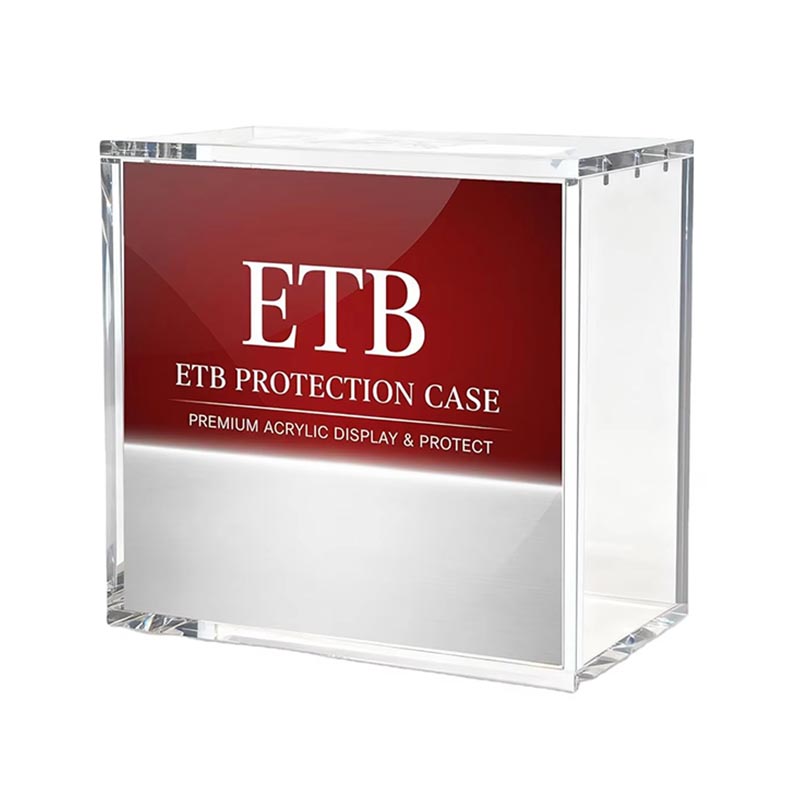
Different Collectibles Require Different Display Solutions
Not every trading card is displayed in the same way. Some collectors prefer individual presentation for valuable cards, while others want to arrange multiple cards into themed collections. Retail businesses may also need countertop displays that make selected products visible without occupying excessive shelf space.
These differences create several product requirements:
- Individual displays for featured or limited-edition cards.
- Multi-card arrangements for themed collections.
- Larger enclosures for cards stored in protective holders.
- Retail display units designed for counters and shelving.
- Customized presentation solutions for branded collectible products.
Understanding the intended application is the first step in developing a suitable display structure.
Why Can Standard-Sized Display Cases Limit Product Selection?
Standard display cases are generally designed around common card dimensions. However, collectors frequently use sleeves, top loaders, magnetic holders, and graded card slabs to organize their collections. These protective accessories increase the overall dimensions of the displayed item.
For manufacturers and wholesale buyers, this creates a practical compatibility issue. A case that fits an unprotected trading card may not accommodate the same card inside a thicker holder.
Custom sizing allows buyers to specify internal clearance, external dimensions, and display capacity according to their actual products. This reduces the risk of ordering display cases that cannot accommodate the intended collectibles.
Which Design Details Should Buyers Customize?
Customization involves more than changing the overall size. The structure and appearance of an acrylic display case also affect its functionality and market positioning.
When developing a new product, buyers should consider several design elements:
Structural configuration
Individual cases, multi-card displays, removable covers, and detachable bases serve different purposes. The selected structure should reflect how customers will access and arrange their cards.
Material thickness
Acrylic thickness should be selected according to the case dimensions, structural requirements, and intended application. The goal is to balance appearance, stability, and material usage.
Surface finishing
Polished edges and consistent panel alignment contribute to a cleaner appearance. These details are particularly important for premium collectible accessories.
Branding and packaging
Custom logos, branded inserts, and retail packaging can help businesses create a consistent product identity across their collectible accessory ranges.
How Does Acrylic Fabrication Support Custom Designs?
Acrylic is suitable for various display configurations because it can be processed into different shapes and dimensions. Depending on the design, manufacturing may involve cutting, engraving, bending, polishing, and bonding.
Each process serves a different purpose. Cutting establishes the required panel dimensions, while polishing improves exposed edges. Bending can create specific structural forms, and bonding connects individual components into a finished enclosure.
However, custom designs should also consider manufacturing feasibility. Extremely complicated structures may increase processing steps, assembly requirements, and production costs. A practical design should achieve the desired appearance without introducing unnecessary complexity.
What Should OEM and ODM Buyers Prepare Before Production?
For overseas businesses developing their own collectible accessory lines, clear specifications help manufacturers evaluate projects more efficiently.
Before requesting a quotation, buyers should ideally prepare:
- Card or protective holder dimensions.
- Desired internal and external case measurements.
- Reference photographs, sketches, or technical drawings.
- Preferred acrylic material and thickness.
- Required quantities and packaging expectations.
- Logo, branding, and retail presentation requirements.
If the final design is not yet available, buyers can begin with reference samples and discuss possible structures with the manufacturer. A prototype can then be evaluated for dimensions, appearance, assembly, and practical usability before bulk production.
Balancing Customization with Wholesale Purchasing Costs
Although customized display cases offer greater design flexibility, buyers should consider the relationship between customization and production economics.
Unique dimensions, additional processing, special packaging, and complex assembly can influence manufacturing costs. For distributors managing multiple product categories, excessive design variations may also increase inventory pressure.
One practical approach is to establish a small number of core display configurations and develop selected variations around them. For example, a business could maintain individual and multi-card models while offering different internal dimensions for specific card holders.
This strategy allows retailers to serve different customer groups without creating an unnecessarily complicated product range.
Working with a Manufacturer to Develop the Right Display Case
Successful customization depends on communication between the buyer and manufacturer. At the development stage, we focus on understanding the intended card format, display environment, structural requirements, and target market. These details help determine suitable dimensions, processing methods, and finishing options.
As an acrylic display case manufacturer, we support customized product development based on customer drawings, reference samples, and project specifications. Whether a buyer needs individual collectible displays, multi-card arrangements, or branded retail solutions, the design should be evaluated for both practical use and manufacturing feasibility.
As the collectible market continues to develop, businesses need display accessories that match increasingly diverse customer expectations. A well-planned Acrylic Trading Card Display Case provides more than an attractive enclosure; it gives retailers, distributors, and private-label brands greater flexibility in developing products that fit their customers and commercial applications.

Ready to Begin?
Product Categories
Contact Information
 Email:
kaelissia.shop@gmail.com
 Phone:
+86-18968933800
 Address:
No.515, Lingxi Strait Avenue, Cangnan, Wenzhou, Zhejiang, China
QR Code
Copyright © Wenzhou Chuangheng Packaging Co., Ltd. All rights reserved.
