 +86-18968933800
 No.515, Lingxi Strait Avenue, Cangnan, Wenzhou, Zhejiang, China


 English
 Français
 Español
 Deutsch
Industry News ·
Industry News ·
Industry News ·
Industry News ·
Industry News ·
Industry News ·
Industry News ·
Industry News ·
Industry News ·
Industry News ·
Industry News ·
Industry News ·
Industry News ·
Industry News ·
Industry News ·
Industry News ·

Which Packaging Details Matter When Sourcing an Acrylic Trading Card Display Case?
As trading card collecting expands across online marketplaces, hobby stores, live-selling channels, and international distribution networks, display accessories must meet more than visual expectations. For wholesalers and retailers, a damaged product can lead to customer complaints, returns, and additional logistics costs. When sourcing an Acrylic Trading Card Display Case, buyers should therefore evaluate not only the case design but also how the product is protected, packed, and prepared for transportation. A reliable packaging solution helps maintain product condition from the factory to the final customer.
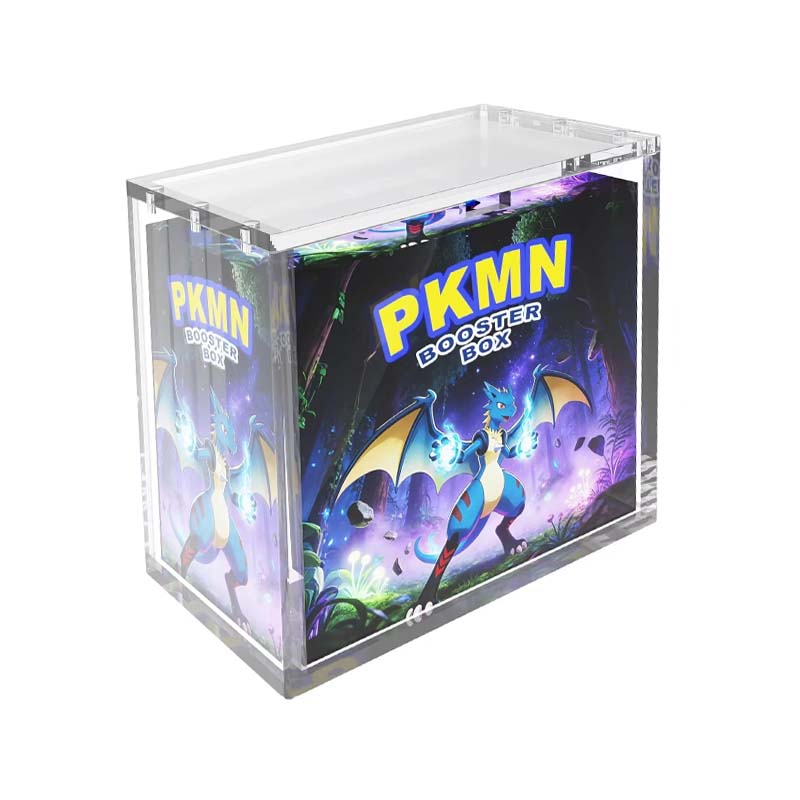
Why Is Packaging Becoming a Bigger Purchasing Consideration?
Trading card accessories are often purchased by collectors who pay close attention to surface condition and presentation. Scratches, cracked corners, dust, or damaged packaging can affect how customers perceive the quality of an otherwise well-made display case.
This concern is also reflected in the wider collectibles market. A 2026 industry report from RRD found that many collectors reject products because of poor-quality packaging. For B2B buyers, this highlights an important point: packaging is part of the overall product experience, not simply an additional shipping expense.
How Can Acrylic Surfaces Be Protected During Transportation?
Acrylic offers a clear and lightweight display solution, but its surface can be vulnerable to scratches caused by friction or contact with other objects. During manufacturing and transportation, protective measures should be considered at several stages.
Depending on the product structure, manufacturers may use:
- Protective masking film to reduce surface scratches during handling.
- Individual protective bags or soft wrapping to separate finished products.
- Foam inserts or cushioning materials to limit movement inside the carton.
- Inner boxes and reinforced outer cartons for additional transportation protection.
The appropriate combination depends on the case dimensions, panel thickness, product weight, and shipping method. Packaging should be tested with the actual finished product rather than selected only by appearance.
What Risks Should Importers Consider for Bulk Orders?
A single damaged sample is easy to replace, but repeated damage across a wholesale shipment can create larger operational problems. Importers should pay attention to carton strength, internal spacing, stacking conditions, and the stability of the packaged product.
For example, acrylic panels should not move freely inside the box. If multiple display cases are packed together, suitable separation is necessary to reduce friction between surfaces. Larger cases may also require additional corner protection to help prevent impact damage.
Buyers can request packaging samples or conduct a trial shipment before confirming a large order. This makes it easier to identify weak points before products enter regular distribution.
Should E-Commerce and Retail Packaging Be Different?
Yes. Different sales channels create different packaging requirements.
For e-commerce sellers, compact packaging and impact protection are important because products may pass through several sorting and delivery stages. Retail distributors, on the other hand, may need packaging that supports warehouse handling, product identification, and shelf presentation.
Some buyers may also require branded cartons, barcode labels, instruction cards, or customized inserts. These details should be discussed during the quotation stage so that packaging costs and production arrangements are clear.
How Does Customization Affect Packaging and Product Design?
Customization should consider both the display case and its packaging. A change in dimensions, panel thickness, opening structure, or base design can affect the space required inside the carton.
For OEM and private-label projects, buyers should confirm the finished product dimensions, protective materials, logo placement, and packaging artwork before mass production. A well-coordinated design can make the product easier to distribute while maintaining a consistent brand presentation.
Manufacturers with acrylic cutting, polishing, assembly, and packaging coordination capabilities can help buyers review these details together rather than treating each stage as a separate task.
What Should Buyers Confirm Before Placing a Wholesale Order?
Before selecting a supplier, procurement teams should request clear information about material specifications, dimensional tolerances, surface protection, assembly quality, and export packaging. It is also useful to confirm whether samples can be provided for fit checks and packaging evaluation.
Buyers should pay particular attention to whether the supplier can maintain consistent finishing and packaging standards across repeat orders. This is especially important for distributors managing multiple retail customers or replenishment schedules.
Can Better Packaging Support Long-Term Business Growth?
A display case is expected to arrive in a condition that reflects its intended quality. When packaging is planned alongside product design, wholesalers can reduce avoidable handling problems and provide a more dependable experience to retailers and collectors.
For manufacturers and distributors, choosing the right Acrylic Trading Card Display Case means looking beyond appearance. Product construction, protective packaging, customization, and production consistency all contribute to a solution that is easier to sell, ship, and reorder.



Ready to Begin?
Product Categories
Contact Information
 Email:
kaelissia.shop@gmail.com
 Phone:
+86-18968933800
 Address:
No.515, Lingxi Strait Avenue, Cangnan, Wenzhou, Zhejiang, China
QR Code
Copyright © Wenzhou Chuangheng Packaging Co., Ltd. All rights reserved.
